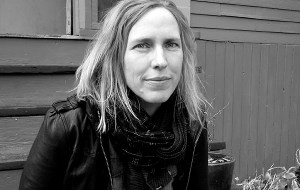
Miriam Toews

Miriam ToewsInterviewed by Sarah Ens

Miriam Toews is the author of five bestselling and critically-acclaimed novels and one work of non-fiction. Her novel A Complicated Kindness was shortlisted for the Scotiabank Giller Prize and won the Governor General’s Award for Fiction. Kindness was also the winner of the 2006 Canada Reads, making Miriam the first female writer to win the competition. Her fourth novel, The Flying Troutmans, was the winner of the Rogers Writers’ Trust Fiction Prize. Miriam has received the Writers Trust Marian Engel/Timothy Findley Award for her body of work, was admitted to the Order of Manitoba, and nominated for Best Actress at the Mexican Academy of Cinematographic Arts and Sciences’ Ariel Awards for her performance in Carlos Reygadas’ film Silent Light.

A long-time admirer of her work, I was thrilled to chat with Miriam via email about her journey as an author and the haunting yet hilarious characters she brings to life, from Summer of My Amazing Luck’s single mom living on welfare in Winnipeg to Irma Voth’s young Mexican Mennonite woman breaking free from her abusive past. Her highly-anticipated new novel is All My Puny Sorrows.

What was your experience publishing Summer Of My Amazing Luck? What were some of the obstacles you faced as a new novelist and how did you overcome them?

Getting my first book published was incredible. I couldn’t believe it was happening. I was absolutely thrilled. Turnstone Press, in Winnipeg, took a chance on me and I’m forever grateful to them. I’m not sure there were any special obstacles I faced other than the on-going pressure to make a living and still find time to write.

[Read more…]

Marilynne Robinson

m_robinson_krwinter300Interviewed by Josiah Neufeld

In 1980 Marilynne Robinson’s first novel, Housekeeping, astonished the American literary world with its beautifully wrought prose, eccentric characters, and elemental images. The novel has come to be regarded as a classic in American literature. Although she continued to write non-fiction after Housekeeping, Robinson didn’t publish another novel for more than twenty years. Her second novel, Gilead, written as a series of  meditative letters from a minister to his son, won the 2005 Pulitzer Prize. Robinson has since written two more novels centred around characters first introduced in Gilead. Home was published in 2008, and LILA will be in bookstores later this year.

Robinson teaches writing at the Iowa Writers Workshop and has mentored writers such as Paul Harding (also a Pulitzer winner) and Justin Torres. U.S. president Barack Obama counts Gilead among his favourite novels. In 2013 he honoured Robinson with the National Humanities Medal.

Robinson is also known for non-fiction. She writes with elegance and authority about subjects such as nuclear pollution, theology, the history of western thought, and the roots of American liberalism. She has published three books of essays and Mother Country: Britain, the Welfare State, and Nuclear Pollution, an excoriation of the Sellafield nuclear reprocessing plant in England.

I fell in love with Robinson’s contemplative prose several years ago while reading Gilead on a road trip across the American Midwest. Since then I’ve read everything of hers I can lay hands on. I was surprised and delighted when she agreed to answer the following questions by email.

How did you come to start writing?

I always liked books, and started writing poems when I was very young. Writing always seemed like something I would do, even when I was not doing it.

[Read more…]

Chris Frey

Chris-Frey-Bio-Pic-wideInterviewed by Roquela Fernandez

Chris Frey is the Editor-in-Chief of Hazlitt, an online magazine based in Toronto. He is also the director of digital publishing at Penguin Random House of Canada.

Once upon a time in Georgetown, Guyana, Frey was mugged, sort of. After a fairly lengthy tussle with his two potential muggers, Frey did what any rational person would do in this situation: dropped to his knees and feigned an asthma attack. Frey’s subsequent article Where Do You Think YOU’RE Going? (published at unlimited) won Gold at the 27th Annual Western Magazine Awards.

Frey has won many other awards besides, including five National Magazine Awards. One of which was for producing an online video, Pagelicker 01: Irvine Welsh.

Frey has contributed to the Globe and Mail, The Walrus, Azure, Maisonneuve, CBC Radio, and Canadian Geographic. He was the founding editor of the website Toronto Standard and the magazine Outpost, and is the Toronto correspondent for Monocle magazine. His forthcoming book Broken Atlas: The Secret Life of Globalization is a character-driven, multinational investigation into what it means to be modern in the twenty-first century.

When you were little, what did you want to be when you grew-up?

I didn’t have a clue. I was a bizarre, lonely child—for a long while I wanted to get into politics. I adored Pierre Trudeau. Basically I wanted to be an equally suave, Anglo Trudeau. Or Bobby Orr.

[Note: It’s difficult to imagine Frey as a bizarre or lonely even as a child. He looks like a way cooler, less uptight Clark Kent – more stripes, chunkier glasses. I bet he gets invited to a lot of parties, but then again maybe even Superman had some lost years.]

[Read more…]

Matt Rader

RaderInterviewed by Christopher Evans

Matt Rader has authored three books of poems:  Miraculous Hours, Living Things, and, most recently, A Doctor Pedalled Her Bicycle Over the River Arno. His fiction, non-fiction, and poetry have appeared in The Walrus, All Hollow, The Fiddlehead, Geist, and many other publications spanning the globe; his work has been nominated for the Journey prize, a National Magazine Award, and the Gerald Lampert Memorial Award, among others. Rader has studied writing at the University of Victoria, the University of Oregon, and the Banff Centre Writing Studio, and has taught at the University of Oregon, Okanagan College, Kwantlen Polytechnic University, and North Island College on Vancouver Island. His first book of short stories, What I Want to Say Goes Like This, will be published by Nightwood Editions in Fall, 2014.

A wise friend turned me on to Rader’s work; A Doctor Pedalled Her Bicycle Over the River Arno became the first book of poetry I ever purchased and revealed to me a secret history of the West Coast, half-concealed under a tangle of weeds. I caught up with Rader via email at his home in Cumberland, BC.

What does an ideal working day look like for Matt Rader?

Though this never happens, my ideal workday begins after a long sleep. It involves a cup of coffee in the morning, swimming, sunshine, fresh fruits and vegetables, various other things that we don’t talk about in interviews like this, and so on. My ideal workday involves almost no work.

[Read more…]

Audrey Niffenegger

NiffeneggerInterviewed by Kelsey Savage

Audrey Niffenegger is the acclaimed author of The Time Traveler’s Wife, winner of the 2006 British Book Award for Popular Fiction as well as the 2005 Exclusive Books Boeke Prize. In addition to also being shortlisted and nominated for a myriad of awards, in 2009 TTW was made into a film starring Rachel McAdams and Eric Bana. Her second novel, A Fearful Symmetry, keeps to the precise and haunting tone Niffenneger so flawlessly navigates in her work.

Beginning in the world of printmaking, art, and education, Audrey’s path hasn’t been altogether linear. Having admired her writing since TTW came out in 2003, I reveled in the opportunity to start up a dialogue with one of my favourite authors. Despite being immersed in projects in London, she gave me the great honour of agreeing to discuss the ins and outs of her writing career trajectory via email.

When you are working on a writing project, what does an average day look like for you?

I don’t exactly have a schedule, or a certain number of words I am supposed to write or anything of that nature. I’m a night person, so the morning is devoted to drinking coffee and reading the New York Times. My studio assistant, Ken Gerleve, arrives at 11:00 and we discuss the day’s projects. Then he goes off to do his work and I answer email, or sit and stare at the computer. At some point in the afternoon I slowly begin to do some writing or make some art. I am most productive after dinner and in the wee hours of the night.

[Read more…]

William Deverell

deverell-croppedInterviewed by Alex Niro

William Deverell is a Dashiell Hammett Prize and Arthur Ellis award-winning crime author who has used half a lifetime of experience practicing criminal law and his dabbling in environmental activism – as well as politics – to create some of the most engrossing crime fiction there is. He is the author of the popular Arthur Beauchamp series and is lauded as the best-known crime writer in Canada. Bill’s bond with his characters and his life experience make for particularly satisfying reading. Bill has also created the long-running CBC TV series “Street Legal” and other screenplays, and holds an honorary D.Litt from Simon Fraser University.

Bill was gracious enough to answer some of my questions via email in between a busy schedule.

What was your experience starting out with novel writing? Were there any obstacles that you feel are noteworthy?

I had a full-on midlife crisis at 40, decided to take a leave from my criminal law practice and follow a dream long held. I disappeared from my Vancouver home into a not-quite-completed cottage on the Gulf Islands, battled several months of block (while my father, a cynical left-wing journalist whose own literary attempts ended in failure, was suffering his own battles with lung cancer), and finally decided to eschew efforts to write according to the strict canons of CanLit, and pounded out a thriller called Needles. My father’s tragic death that year, 1979, ironically freed me to write in a genre he often declaimed against. (But I know in my heart he would have been proud, for, ironically, Needles won a literary prize, the Seal First Novel Award, and $50,000.)

[Read more…]

Ian Williams

ian-williams-author-photo_0Interviewed by Jennifer Spruit

Ian Williams is the author of Personals, shortlisted for the 2013 Griffin Poetry Prize and the Robert Kroetsch Poetry Book Award; Not Anyone’s Anything, winner of the 2011 Danuta Gleed Literary Award for the best first collection of short fiction in Canada; and You Know Who You Are, a finalist for the ReLit Prize for poetry. He was named as one of ten Canadian writers to watch by CBC.

Not only does Ian write short stories packed with the power of precision and disarming poetry that holds our very us-ness up to the glare as it is refracted back, he’s also working on a novel I’m eagerly anticipating.

I’ve been an admirer of Ian’s writing for some time, and have especially enjoyed his blog, on which I found out he’s a man who prefers a well-dressed serif font. Ian was kind enough to chat with me via email.

Your short story collection, Not Anyone’s Anything, includes simultaneous narrators, flashcards, and a story with a basement. How do you, as a writer, balance reader experience and expectations for how to approach a text with a desire to create something original?

Each story needs a feature that’s formally interesting. If I wrote “While” and “Not Anyone’s Anything” and “Break-In” with the good manners of Dickens, say, then they would be frustrated stories in hand-me-downs. Formal play doesn’t have to be spatial or wild but it should be jagged enough to snag the reader away from all of the smooth prose of emails, advertising, and websites. While writing Not Anyone’s Anything, I kept asking myself, Why must this be a story and not a film or a song or a cake? And the answer led to all sorts of textual exploitations: because your attention cannot be on you and the one you love without one of you disappearing, because there are other literacies apart from English, because people who live in basements are often footnoted.

Trying to be original is like trying to be cool.

[Read more…]

Elizabeth Bachinsky

ELIZABETH-BACHINSKY-nov2013-800x450Interview by Nicole Boyce

Elizabeth Bachinsky is the Editor of EVENT Magazine, an award-winning journal published out of Douglas College in its 42nd year of publication. Bachinsky is the author of five collections of poetry. Her work has been nominated for the Bronwen Wallace Memorial Award, the Pat Lowther Memorial Award, and the George Ryga Award for Social Awareness in Literature. Her second collection, Home of Sudden Service, was nominated for the Governor General’s Award for Poetry. She is a graduate of UBC’s MFA Creative Writing program and a creative writing instructor at Douglas College.

I spoke to her on the phone, as she was—in typical multitasking style—en route to a meeting of EVENT’s fiction board. She was delightfully friendly, funny and candid.

How did you become interested in literary magazine editing?

I’ve always been interested in magazine editing. I had a friend not long ago who sent me a copy of a literary magazine that I edited in high school called Free Word. It was just a little photocopied pamphlet that we were publishing at Thomas Haney Secondary in Maple Ridge. I had totally forgotten that I’d ever done that, but I did, and I was also involved in the yearbook, that kind of stuff. I wanted to be a publisher for a long, long time. Even when I was a little kid, I’d rewrite fairytales and draw pictures with them and put them in laminated covers and staple them. But I didn’t start doing it for money, like, as a “job-job,” until I worked at PRISM international. I was the Assistant Editor there, then the Poetry Editor.

[Read more…]

Ruth Ozeki

ruth-ozeki

Photo Credit: Kris Krug

Interviewed by Kris Kosaka

Bestselling author Ruth Ozeki celebrates the Zen idea of the “positionless position,” the “not one not two” ambiguity of life with her being and her work. Her third novel, A Tale for the Time Being, was short-listed for the 2013 Man Booker Prize in Literature. Her earlier novels, My Year of Meats and All Over Creation were also critically acclaimed and have been translated into 11 languages and published in 14 countries.

Ozeki is half Japanese and half American in ethnicity, holds American and Canadian citizenship and divides her time between New York city and Desolation Sound along the Sunshine Coast in British Columbia. Ozeki started her artistic career as a filmmaker, and her documentaries and dramatic independent films have been shown on PBS, at the Sundance Film Festival, and in colleges and universities across the States.

In addition to being a filmmaker and novelist, Ozeki is also a Buddhist priest. Not one thing, not another, Ozeki is a true master. A fan of all her works, it was an honor to connect with Ms. Ozeki recently by phone from my base in Japan.

Describe an ideal morning in Desolation Sound.

Wake up early-ish, maybe six or seven, and it is raining outside.  It is clear that it is going to rain all day. Go down to my office, which is in a different building, and make a pot of tea.  Go to the zen-dō and sit.

Maybe read a little bit, and then go up to my office to spend the day writing.

*The is a spiritual hall or place where zazen, sitting meditation, is practiced. Ozeki has a small zen-dō on her property in Desolation Sound.

[Read more…]

M.A.C. Farrant

mac-farrantInterviewed by Michelle Kelm

M.A.C. Farrant is an award-winning Canadian author of fiction, nonfiction, and memoir. She is a regular book reviewer for the Globe & Mail and the Vancouver Sun and has taught writing at the University of Victoria, the Banff Centre for the Arts, and MacQuarrie University in Australia where she was Writer-in-Residence.

Farrant has been nominated for the Commonwealth Writers Prize, The Van City Book Prize, the Ethel Wilson Fiction Prize, the National Magazine Awards, and the Gemini Awards for the Bravo short film adaptation of her story, Rob’s Guns & Ammo. Her novel, The Strange Truth About Us was a Globe & Mail Best Book for 2012. Her latest stage play is My Turquoise Years.

I have admired Farrant’s intelligent and bizarre humour for years and was delighted when she agreed to speak to me by email.

It’s clear from My Turquoise Years that your upbringing was a bit unusual. Can you describe your childhood?

My childhood was highly unusual for the times – Post-war, fifties and early sixties – when the nuclear family represented something like 92% of all Canadian families.  So to have a willingly absent mother, a visiting father from Vancouver, and to be raised by my father’s sister, her husband, and the rest of the extended family, was an anomaly, to say the least.  Feelings of being different arose, of course, but, actually, I had a great childhood filled with inventiveness, creativity, and the freedom to be who I was.  The family was very tight-knit and they pretty much thought I was wonderful even though I was a pain in the ass a lot of the time.

[Read more…]