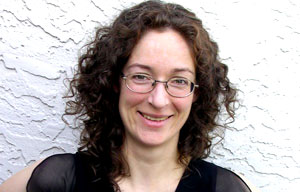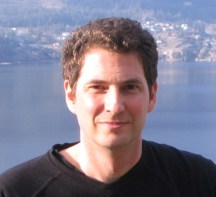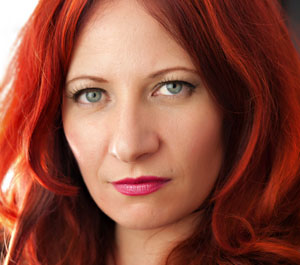
Amber Dawn

Amber-DawnBy Leah Horlick

Amber Dawn came to my house for an interview one rainy February afternoon during the last term of my MFA in Vancouver. “It’s so weird to be here,” she told me. “I used to have friends who lived in this house. It was a bit more punk rock then. I even broke in through that back window one time.”

As if she wasn’t badass enough already, Amber Dawn is a writer, filmmaker, activist, and performance artist whose first novel, Sub Rosa, won a Lambda Literary Award in 2011. Her poetry chapbook How I Got My Tattoo won the Eli Coppola Chapbook Prize from RADAR Productions in 2012, when she also won the Writers’ Trust of Canada Dayne Ogilvie Prize for LGBT Writers. In her forthcoming book How Poetry Saved My Life, Amber Dawn tells her story of working in the sex trade in Vancouver through nonfiction and poetry. I spent an afternoon with Amber Dawn where she talked about her star-crossed relationship with memoir and poetry, and her commitment to community activism.

I was wondering if you could tell me a bit about writing and publishing a mixed-genre book like How Poetry Saved My Life.

Well, I first of all did not say to myself, “I want to write a mixed genre prose and poetry book” and set out to do that. If someone asked me to write out my life story, or a chunk of time where I worked in the sex trade, there’s no way I could stomach it. I also just don’t feel like my story is best told through a chronological view of time. I don’t think that most people’s lives are that tidy, and mine certainly isn’t. So I just started writing bits and pieces, mostly therapeutic to begin. Then, when I got to grad school I tried nonfiction with Andreas Schroeder for the first time. That’s when I really started to write my story, in that class. But where I did most of my writing was to submit to sex worker festivals in the United States that were. I would often write just to be able to be in those shows, I was so desperate for community. It was great to leave the city and be more anonymous. And eventually realized I had a book’s worth of writing. And even then I sat on it for a long time because I wasn’t sure if I wanted to put it out in the world. So I didn’t set out to do it. If I had set out to do it I’m sure I would have failed. [laughs] [Read more…]
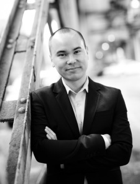
Alec Nevala-Lee

nevala-leeBy Zoë Gulliver

Alec Nevala-Lee is a novelist and freelance writer whose first book, The Icon Thief, is a thriller set in the New York art world. It’s the first in a trilogy published by Penguin. A second installment, City of Exiles, came out last year, with a third, Eternal Empire, to appear September 2013. In addition to writing short fiction, his essays and nonfiction have been featured in the Los Angeles Times, Salon, The Rumpus, and The Daily Beast. He lives in Oak Park, Illinois with his wife and baby daughter and somehow finds time to blog eloquently at http://nevalalee.wordpress.com/ and give smart replies to interview questions by email.

You say on your website that you wrote your first novel at the age of thirteen, but that “thankfully, only one copy survives.” How many copies were there? What is the general premise, and does it relate to or foreshadow some of your work now?

The only remaining copy consists of two hundred faded double-spaced pages from an ancient dot-matrix printer, and although there’s probably a version of it somewhere on floppy disk, it’s in a format that’s no longer readable—which is true of almost everything I wrote before high school. I haven’t looked at it in almost two decades, but it was heavily influenced by Dune and the work of Orson Scott Card, and involved intelligent fish and a religious matriarchy on a planet covered entirely by water. I still love science fiction, but these days, I tend to focus on contemporary settings, and leave the world-building to the experts. [Read more…]

Annabel Lyon

annabel_lyon By Nathan Smith

Annabel Lyon is a Canadian novelist and short story writer, born in Brampton, Ontario, but raised in Coquitlam, British Columbia. Her short story collection, Oxygen, was published in 2000. Since then, she has published a second short collection, two young adult novels, and two historical novels.

The Golden Mean, published by Random House in 2009, was the only novel that year to be nominated for the three major Canadian fiction prizes: the Rogers Writers’ Trust Fiction Prize, the Governor General’s award for English Language Fiction, and the Scotiabank Giller Prize–the first of which it won. Her most recent novel, a sequel to The Golden Mean, is The Sweet Girl.

Annabel currently teaches in the Creative Writing department at UBC.

What did you do before you were a writer?

My very first ambition as a child was to become a musician. I studied piano intensively and taught it for years, but to make another sports analogy, I was like someone who was 5’5″ and wanted to be in the NBA. It just wasn’t going to happen. I studied philosophy in my undergraduate program with English and French literature minors. I also did a year in the Law program. I initially didn’t think I would be able to sustain myself as a professional writer, so I thought I’d better have a backup. It seemed like the logical next step. After a year I was miserable and I dropped out.

Eventually it just came down to finding the confidence to say, “Okay, I’m going to throw myself into fiction writing wholeheartedly and work as hard at it as with any other profession.” The next day, I woke up at six in the morning and decided to start writing a novel. [Read more…]

Stacey May Fowles

SMFowlesBy Ginny Monaco

Stacey May Fowles has published two novels, Be Good and Fear of Fighting – which was later adapted for the stage. Her third novel, Infidelity, is due from ECW later in 2013.  She is a regular contributor to the National Post and her writing has appeared in Taddle Creek, Prism, and Maisonneuve.

In July of 2012, she was accepted into the Banff Writers Centre. She had taken time off from her job as the Director of Circulation and Marketing for The Walrus and intended to write a memoir “about coming of age in serial rapist and murderer Paul Bernardo’s hometown during his crimes as the Scarborough Rapist.”

Fowles was forced to confront her own assault in ways that left her “a walking open wound, telling stories I never intended to tell.” Her National Post essay  “What can’t be published”  is a thoughtful exploration of what it means to write about assault. Like most of her work, the essay is informed by two of Fowles’ major titles: writer and woman.

I recently spoke to her about what it means to be a female writer in Canada, how she deals with rejection, and her new obsession with sports writing.

Can you give me a quick rundown of your career path as a writer? How did you come to work at The Walrus?

I always wanted to write – knew that for most of my life. I was just never sure if that meant it would be my “job,” or something I just had to make time for. Early on I was writing fiction exclusively, and it was pretty clear there wasn’t going to be a living wage in that, certainly not for a long time.  In my early twenties I was working on a novel and got a part time job with a literary journal as their circulation manager. I think initially I had hoped that it would be a door to becoming an editor, but instead I fell in love with magazine circulation and how well it compliments a writing life.  I’ve been doing it for about a decade now, and have been with The Walrus for five years. It’s really helped me fund my writing projects while remaining connected to a writing community. I’ve paralleled my work there with writing more non-fiction – book reviews, essays, and more journalism-style work. [Read more…]

Nancy Lee

nancy-leeBy Kat Haxby

Hailed by the Globe and Mail as “a masterwork of revelation,” Nancy Lee’s collection of short stories, Dead Girls, (McClelland & Stewart, 2002) was named a Best Book of 2002 by the Globe, Toronto Star and Vancouver Sun, and NOW Magazine. Winner of the 2003 VanCity Book Prize and finalist for the Ethel Wilson Prize, the Danuta Gleed Literary Award, the Pearson Reader’s Choice Award and the Wordsworthy Award, Dead Girls has been published in the UK, Germany, Italy, France, Holland and Spain, and has been optioned for film.

Nancy Lee is the recipient of numerous fellowships, residencies and awards, including a Gabriel Award for Radio and a National Magazine Award. An Adjunct Professor in Creative Writing at the University of British Columbia, she also teaches at the Simon Fraser University Writing & Publishing Program and the UBC Writing Centre. Nancy has served on numerous prize juries and panels, and was selected as the first Canadian Writer-in-Residence at the prestigious University of East Anglia Writing Program in the UK. She most recently served as Writer-in-Residence for the city of Vincennes, France from September to December 2011. Her novel, The Age, will be published by McClelland & Stewart in 2014.

I interviewed Nancy Lee in her office on UBC campus. She was hilarious, inspiring and entirely gracious. She also didn’t make fun of how ridiculous I looked fumbling with the iphone app I used to record the conversation, or how many bad jokes I made.

Is there a story to how you became a writer? Was it a flash of inspiration or more of a slow realization?

Well, there is actually a story, and it’s a very strange story. I was twenty-five and working as a publicist. I had my own cottage public relations company and I was working as a publicist for a bunch of live theatre things in Vancouver. I had a business partner and while my business partner and I were in LA taking a series of meetings with a potential client, we went to see a psychic in Santa Monica. It was one of those trashy LA shacks with a neon storefront, a TV on and some kids screaming in the back. We went just as a joke, just to get our palms read. My business partner got the usual, “You’re going to meet a man, have adventures,” your stereotypical palm reader stuff. So when the palm reader looked at my palm, She said, “Oh. You’re not doing the right thing with your life, and until you do the right thing you’re not going to be happy.” And that was about all she said. After when my business partner and I went out for coffee, I said it was a bunch of horseshit and she said it was actually an interesting question, “What would you be doing if you weren’t doing this?” [Read more…]

Michael V. Smith

michael-v-smithBy Reece Cochrane

Michael V. Smith, originally from Cornwall, Ontario, is a writer, filmmaker, and performance artist now living in Kelowna, British Columbia. Smith is an MFA in Creative Writing graduate from UBC, and he currently teaches creative writing at UBC’s Okanagan campus. Smith’s short story “What We Wanted” was nominated for the McClelland & Stewart Journey Prize. His first novel, Cumberland, was nominated for the Amazon.ca First Novel Award. His book of poetry, What You Can’t Have, was published by Signature Editions in 2006, and his most recent novel, Progress (Cormorant Books, 2011), is a compelling story about a woman’s struggle to conceive her own notion of progress amidst a changing landscape and revelations about her past.

What in your childhood do you believe contributed to your wanting to become a writer?

I had a terrible childhood. I needed a lot of escapism, so I read a lot of books. And books were civilizing. People in books were moral; the heroes ultimately made good decisions, and their lives were better for it. I found books very educational in terms of other possibilities for how to live. I’ve always learned well by example—maybe that came from books. They saved my life, and so I’ve always been really interested in the arts. [Read more…]

Fiona Lam

fiona-lamBy Tara Armstrong

Fiona Tinwei Lam is the author of two books of poetry, Intimate Distances and Enter the Chrysanthemum. Her poetry, fiction and non-fiction have been included in over twenty anthologies. She is a co-editor of and contributor to the literary non-fiction anthology, Double Lives: Writing and Motherhood published by McGill-Queens University Press in 2008.  She edited The Bright Well, a collection of contemporary Canadian poetry about facing cancer, published by Leaf Press in 2011. Oolichan Books will be publishing The Rainbow Rocket, her first book for children in 2013.

Stepping into Higher Grounds Coffee on a drizzly Thursday morning, Fiona Tinwei Lam scans the room. I wave. She approaches. We shake hands. Then, we argue over who will pay for the tea. “I’ll pay. You’re a student,” insists Fiona. “It’s your time. Please,” I say. I win and we settle into the interview over two cups of herbal tea.

Did you always write, even as a child?

I started writing poetry regularly in grade seven. I was encouraged by my teacher to keep going, so I continued writing poetry through high school. But then when I reached university I thought it was time to be practical. So I did a degree in political science. Then I did two law degrees. And it wasn’t until after all of that, that I came back to writing, and completed an MFA in Creative Writing at UBC. [Read more…]

Dennis Cooper

dennis-cooperInterviewed by Leah Mol

With nine novels under his belt, Dennis Cooper has been called “the most dangerous writer in America,” (by the Village Voice) although he’s humbly stated that the tag is nothing more than a “journalistic convenience.” Along with his work as a novelist, he’s also published poetry collections, short story collections and nonfiction, has worked as an editor and publisher, and has collaborated on projects with artists of all kinds. His most recent collaboration is his seventh work with French director Gisele Vienne, a theatre piece called “The Pyre.” It will premiere in Paris in May.

Dennis is best known for his five-book George Miles Cycle (http://www.dennis-cooper.net/georgemiles.htm), which he planned for over a decade and then spent another ten years actually writing. The cycle was heavily influenced by and written as a result of his relationship with friend and lover George Miles. It’s been thirteen years since the last book of that cycle was published, but George Miles has certainly not been forgotten. Dennis is currently working on his tenth novel, a retelling of his real-life relationship with George, which he hopes will give people an opportunity to get to know “the real George.”

While working on both his theatre collaborations and a novel, Dennis still, somehow, finds the time to update his blog, which has become an artistic project in itself. You can read it here (http://denniscooper-theweaklings.blogspot.ca). He also found the time to answer some of my questions about his work and his life as a writer.

Was there ever anything you wanted to do other than be a writer?

Right before I decided to be a writer at 15, I wanted to be an archeologist. My parents arranged for me to go assist on an archeological dig in Peru for a summer, and the work was so tedious that I changed my mind. In my later teens, there was a period where I wanted to be a visual artist and filmmaker in addition to being a writer, but I didn’t have anywhere enough talent in those other two areas.
[Read more…]

Kenneth Oppel

Kenneth Oppel Picture (credit Jim Gillett).jpgBy Russell Hirsch

Kenneth Oppel is one of Canada’s leading authors for young adults. His Silverwing series about the adventures of migrating bats captivated a generation of readers and earned him the Canadian Library Association Book of the Year for Children Award in both 1998 and 2000. In 2004, Ken won the Governor General’s Literary Award for Children’s Literature with his novel Airborn. Born in 1967 in Port Alberni, British Columbia, Ken grew up in Victoria, BC and Halifax, NS. After publishing his first novel, Colin’s Fantastic Video Adventure, at age 17, he obtained a degree in Cinema Studies and English from the University of Toronto. He has lived in England, Ireland and Newfoundland and is now based in Toronto. I had the opportunity to hear Ken talk to the Vancouver Children’s Literature Roundtable last October and was inspired to touch base with him.

What’s the earliest story you remember writing as a kid and what were the books or films influencing you at the time?

In grade five I launched into a sci-fi epic called Starship (later retitled Rebellion) which was a shameless rip off of Star Wars. I lived and breathed Star Wars at that time. I wrote many chapters in a Hilroy school exercise book before abandoning it.

[Read more…]

Richard Van Camp

Richard Van CampBy Curtis LeBlanc

Richard Van Camp is the author of twelve books and a proud member of the Dogrib (Tlicho) Nation from Fort Smith, North West Territories. He is a graduate of the En’owkin International School of Writing, the University of Victoria’s Creative Writing BFA Program, and has an MFA in Creative Writing from the University of British Columbia.

Richard was a major factor in my decision to come to Vancouver and pursue a BFA in Creative Writing at the University of British Columbia. After studying his novel The Lesser Blessed in an introductory English Literature class at the University of Alberta, I began researching Richard and found his name coming up often in connection with UBC. That spring, I promptly submitted my application to transfer.

More recently, I connected with him on Twitter (@richardvancamp) and asked if he would be willing to do an interview. As I believe is evident in the following email exchange, Richard Van Camp is as funny, tender, and incredibly generous as his writing suggests.

First: a quick one for you Richard. Top three favourite authors?

My top three favourite answers at this point in time are:

  1. Gregg Hurwitz for The Punisher’s Girls in White Dresses (Marvel). For anyone doubting the authenticity of graphic novels today, check out this tale of brutal violence and redemption.
  2. The writing team of Mike Costa and Christos N. Gage for the IDW graphic novel GI Joe: Cobra -The Last Laugh. This series follows “Chuckles”, a GI Joe operative hell bent on infiltrating Cobra. It’s ruthless, terrifying and a story I think should be mandatory for all creative writing students. The research that went into this narrative is mind-blowing and I’ve read the series three times now. I know I’ll go back many, many times as it’s an instant classic: right up there with Elektra Assassin and The Walking Dead.
  3. Robert Kirkman’s The Walking Dead (Image Comics) is one I’ve followed for years and it just does not let up. The thing about Kirkman’s writing is he makes it very clear that in the zombie apocalypse, it’s not the zombies you have to worry about: it’s the humans. [Read more…]