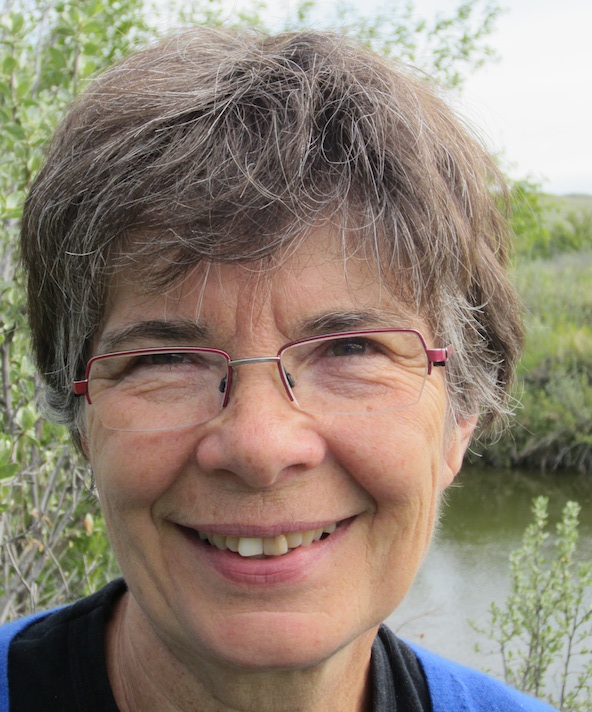
Mary Schendlinger

MarySchendlingerBy Tristan Koster

A lot of us have dreams of writing a bestseller or that groundbreaking article, but very little of that ever comes to light without the work of accomplished editors and publishers. For more than forty years Mary Schendlinger has been editing and publishing literary works. She’s also a writer who specializes in comics and creative nonfiction, much of which has been published in the literary magazine that she co-founded: Geist.

In addition Mary is the author of Prepare to be Amazed: The Geniuses of Modern Magic, Power Parenting Your Teenager, The Little Greenish-Brown Book of Slugs and many articles, comics and reviews. She has edited books for Douglas & McIntyre, Greystone Books, Raincoast Books, Heritage House, Calypso Books, and Arsenal Pulp Press, and has worked as the editorial/production assistant and promotions manager in-house at Talonbooks and Harbour Publishing. She teaches both at UBC and SFU.

In an email correspondence she described her career as “not a very commercially successful one” but Mary has been able to support herself and her family and her path reflects the kind of career that many of us could only dream of.

What got you started writing?

I don’t know because I’ve been writing for as long as I can remember. I was just one of those kids who was always writing stories. There are some comics that I made; I thought they were just little pictures with words on them. Many years later I found out they were comics. I didn’t know they were comics at the time, first of all because I was little, and second because my dad disapproved of comics so we didn’t have any around. It’s probably why I like them so much. My dad was a great guy but he disapproved. Later I did other things, to make a living, and I had kids. But the writing was always there.
[Read more…]

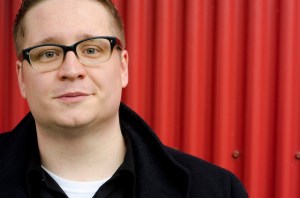
Charles Demers

CharlieDemersby Rob Peters

Born and raised in Vancouver, Charles Demers has published two books: The Prescription Errors, a novel, and Vancouver Special, a collection of essays, which was shortlisted for the Hubert Evans Non-Fiction Prize. He regularly performs comedy at live venues across Canada and on CBC Radio One, where he has been described as “Truly one of the smartest comics out there.” He often appears on The Debaters and This is That. He’s written extensively for television, radio, stage, and the web, and he works as an adjunct professor in the Creative Writing Program at the University of British Columbia.

You’re often introduced as a writer, comedian, and political activist, usually in that order. Which of those labels do you most strongly identify with?

The cop-out-but-sort-of-true answer is: it depends on the situation. They’re overlapping categories to a certain extent, and I think I’m happiest, or most satisfied, when I get to engage all of them at once. One of the greatest moments of my professional life in the past several years was at a CBC Debaters taping in Saskatoon, where I was arguing for  Tommy Douglas. It scratched a lot of itches at once: I got to write something that I felt was smart and funny, I got to perform it for a super hot crowd, and I got to slather the whole thing in socialism. A while back we did a taping in Kelowna, and I argued that it was time to give Karl Marx another look, and I won the debate; normally we don’t care who wins or loses, it’s like wrestling, but to win for Karl Marx in the middle of one of the most conservative places in Canada, and to have made the audience laugh, felt very nice.

[Read more…]

Tanya Davis

TanyaDavisBy Alexis Pooley

Tanya Davis was the 2011/12 Poet Laureate of Halifax, Nova Scotia. Her creative collaboration with Andrea Dorfman, the videopoem How to be Alone, has had more than 5 million views on YouTube, garnering Tanya new fans and supporters from the world over. She regularly receives commissions to pen poems and speeches and has worked in this regard for such bodies as the Canada Winter Games, the PEI Advisory Council on the Status of Women, CBC Radio, and the National Film Board of Canada. She also works and performs as a songwriter and musician and has released 3 full length albums, picking up awards and nominations for each one. Her first book of poetry, At first, lonely, was published in 2011 by Acorn Press.

Your work has often sidestepped traditional, singular genres in order to merge and embrace multiple genres and has attracted a widespread audience. When you first began your career did you ever have concerns, not in your work or in your creative vision, but in your work finding an audience?

I had a few concerns, sure, but they didn’t overwhelm me. At the end of the day, I’m not that strategic, in the business-savvy sort of way. I make art for joy and fulfillment and because it’s the kind of work I’ve come to realize I do best; that is, in all its facets. I just want to create things and so it’s less of a priority to cultivate one specific audience. I like to do lots of different things. It makes life (and creativity) more interesting. [Read more…]

Melanie Little

MelanieLittleInterview by Kari Lund-Teigen

Melanie Little is an award-winning author and editor. Her debut collection of stories, Confidence, was shortlisted for the Danuta Gleed Award and selected as a Globe and Mail Top 100 Book. Her 2008 novel-in-verse for young adults, The Apprentice’s Masterpiece, was a Canadian Library Association Honour Book, a gold medalist at the Independent Publisher Book Awards, and a White Raven selection for the International Youth Library in Munich.

She began her career as an editor by bringing Freehand Press to national prominence in its first year with the Giller-prize finalist Good to a Fault by Marina Endicott. Of Melanie Little as an editor, Endicott has said “she brings a truly ridiculous diligence to any task she undertakes.” After teaching creative writing at Dalhousie, Little returned to editing as the editor-at-large for Annick Press before becoming the senior editor of Canadian fiction at House of Anansi Press.

I wrote to Melanie to request an interview, mentioning a long-ago talk we’d had while she was the writer-in-residence at the University of Calgary. In that meeting, she was exceedingly kind and encouraging. That moment of encouragement meant a lot to me, and I wondered, as I often do, not how writers begin, but how they continue.

Little recently stepped down as senior fiction editor at House of Anansi Press to devote more time to her own writing. She graciously agreed to the interview (preferring, as I think many writers do, to conduct it via email). I sent her a list of questions, telling her to ignore those that were not interesting to her or that she did not feel like answering. True to form, she answered them all, with generosity and depth. [Read more…]

Matt Bell

Matt BellInterview by Kristina Born

Matt Bell is the author of How They Were Found, a collection of short fiction, Cataclysm Baby, a novella, as well as three chapbooks: Wolf Parts, The Collectors, and How the Broken Lead the Blind. He teaches creative writing at Northern Michigan University, and is the senior editor at Dzanc Books, where he also runs The Collagist, a literary magazine. Matt’s debut novel, In the House Upon the Dirt Between the Lake and the Woods, will be published by Soho Press in June 2013.

I spoke to Matt over email.

Can you talk a bit about growing up in Michigan? Were you bookish as a child? In your early years, did you read anything that was particularly influential?

I grew up in a small town called Hemlock, about two hours north of Detroit, out in the country but close to a couple of medium-sized cities: I lived there into my early twenties, then moved to the nearby city of Saginaw for a few years before my wife and I moved to Ann Arbor for her to start her PhD at Michigan. I was a pretty prolific reader as a kid—my brother and I both read a lot, and read most books together, one after the other—and a lot of books come to mind when I think of reading before and during my teens: The Hobbit and The Lord of the Rings were of course both big draws, and maybe the first “adult” books I read. Out of all the Isaac Asimov I read then, I think I started with Robots and Empire and kept coming back to it. I read a lot of fantasy novels—David Eddings was a favorite as a teenager, as were the many Dungeons & Dragons novels out there, especially those by R.A. Salvatore, Troy Denning, Margaret Weis and Tracy Hickman. Choose Your Own Adventure-style books were favorites for a long time, and mirrored my interest in the Infocom text adventures I played on the computer: with D&D, those were my first experiences with malleable narratives, with creating story by making choices. I can also remember being given Steinbeck’s The Red Pony really early and being sort of entranced by it—I was young enough that I can remember sitting at a desk in front of my grandpa’s VIC-20 computer and reading that book, so who knows how long ago that was. And then in the sixth or seventh grade I started reading Stephen King end to end—The Dark Tower books were my favorite books of his then, and still are—plus people like Dean Koontz, John Grisham, and so on. I read mostly that kind of stuff until after I dropped out of college for the first time—around nineteen?—and then I had a brief flirtation with the Beats before I found Kurt Vonnegut, before an interview with Chuck Palahniuk in Poets and Writers led me to Raymond Carver, Amy Hempel, and (most importantly) Denis Johnson. [Read more…]

Lee Henderson

Lee HendersonInterview by Anita Bedell

Lee Henderson is a Canadian writer and Associate Professor of Creative Writing at the University of Victoria, British Columbia. He has published two award-winning books with Penguin Canada — the short story collection The Broken Record Technique and the novel The Man Game, which won the Ethel Wilson Fiction Prize, the BC Book Prize and the Vancouver Book Prize in 2009. Lee’s fiction and art writing is regularly published in The Walrus and Border Crossings magazine; other short stories have appeared in numerous magazines and journals. He has curated exhibitions of contemporary art and experimental music.

Prior to moving to Victoria, Lee taught Creative Writing at the University of British Columbia in Vancouver. I was fortunate to have Lee as my fiction teacher at UBC during my first year there. His feedback was always insightful and I especially liked the cartoons he drew on my stories—I’ve kept them all.

I welcomed the opportunity to reconnect with one of my favourite teachers for this interview.

When you were little, did you know you wanted to be a writer?

I loved making up stories, for sure, but for most of my childhood and adolescence I wanted to be a cartoonist. [Read more…]

Candace Savage

Candace SavageInterview by Sierra Skye Gemma

Candace Savage is the author of more than two dozen books on an impressive breadth of subjects—from in-depth books on natural history such as Prairie: A Natural History, Aurora: The Mysterious Northern Lights and Wild Mammals of Western Canada, to literature for children. A distinctive voice of western Canada in conversation with the world, she has earned an international reputation that is evidenced by her many awards and honours including the $60,000 Hilary Weston Writers’ Trust Prize for Nonfiction; induction to the Honour Roll of the Rachel Carson Institute at the Chatham College of Pittsburgh in recognition of her lifetime contribution to environmental awareness; induction to the Royal Society of Canada; an Honour Book Award in recognition of outstanding achievement in Children’s Literature; two Saskatchewan Book Awards; an Independent Publishers Award; and many others.

I met Candace when she gave an intimate reading of her latest book, A Geography of Blood, at the University of British Columbia. As a nonfiction writer, I was inspired by Savage’s lyrical presentation of a nonfiction topic that so easily could’ve been delivered dry and boring by less talented hands. After the talk, I asked Savage if I could interview her.

Your latest book, A Geography of Blood: Unearthing Memory from a Prairie Landscape, won the Hilary Weston Writers’ Trust Prize for Nonfiction. Can you tell me how that felt? Were you surprised? What has winning the prize, and the recognition that comes with it, meant for you?

I was astonished. Until the call came to say the book had been shortlisted, I’d never even heard of the award—this is just its second year—and even after I’d won, it took me a while to understand what a big deal it was.  The richest literary award in the country:  really? for me? Obviously, you have to take all awards with a huge grain of salt—how could one book be the “best” in any absolute sense?—so win or lose, it’s all a bit silly.  But winning feels very good, and the recognition has definitely increased the demand for my services. Some wit once observed that money is the sincerest form of compliment, and I feel suitably affirmed. [Read more…]

Michael MacLennan

mmaclennan-lgInterview by Steve Neufeld

Born in Vancouver, Michael Lewis MacLennan now divides his time between Toronto, Vancouver and Los Angeles, working as a playwright, screenwriter and TV producer.

He began his screenwriting career as Writer and Story Editor for CBC’s Wind At My Back, then went on to be a Co-Executive Producer on Showtime/Showcase’s Queer As Folk, a ground-breaking drama about urban gay culture. After that he became Co-Creator, Executive Producer and head writer of City TV’s flagship dramatic series about a high-end restaurant in Yaletown called Godiva’s. Currently Michael is helming his new series, Global TV’s Bomb Girls, which chronicles the lives of the women who worked in a Toronto munitions factory during World War II.

I get Michael on the phone on January 16th, 2013, just before the latest episode of Bomb Girls airs on Global. Michael has just arrived home after a pitch meeting that ran long. He takes a moment to pour himself a drink, while I unsuccessfully attempt to set my phone to speaker. Then he sits down, I jam my phone between my shoulder and ear, and we get to talking.

After my first question, he says, “Oh man, I haven’t thought about this stuff in years. I didn’t realize it was going to be this kind of interview.” I apologize, hoping he doesn’t feel like I am trolling, Barbara Walters-like, for tearful confessions, but Michael assures me it’s fine, and we slide into an easy conversation. [Read more…]

Michael Chabon speaks with PRISM

Our sister (cousin?) publication at UBC, PRISM international, has been doing a great job publishing book reviews and interviews, and has a fascinating interview up with Michael Chabon:

In Kavalier and Clay you went to comics for the feel of the narrative, and in The Yiddish Policeman’s Union you channeled the great detective writers like Chandler and Hammett. In Telegraph Avenue, I found it was your voice I was hearing more than anyone else’s. Were you looking for a specific voice in Telegraph Avenue?

Every book requires that you invent a dialect in which to write it. That was as true of this book as any other. To me, the narrator of this book felt most closely akin to the narrator of Kavalier and Clay. In that book, even though different chapters are written from different characters’ points of view, they are very heavily filtered through the voice of the narrator, who has encyclopedic knowledge of all subjects and is a master of time and history and location. That narrator is present in this book too, but he’s concealed himself under the thoughts and internal voices of the characters, though he reveals himself in flashes. When Archie is first introduced—”moon-faced, mountainous, moderately stoned” and “Oft-noted but not disadvantageous resemblance to Gamera”—those aren’t things Archie thinks about himself. In this book, the narrator steps back more frequently into the background.

Read the full interview.