Lucia Frangione

LUCIA3FINALwebInterviewed by Veronique West

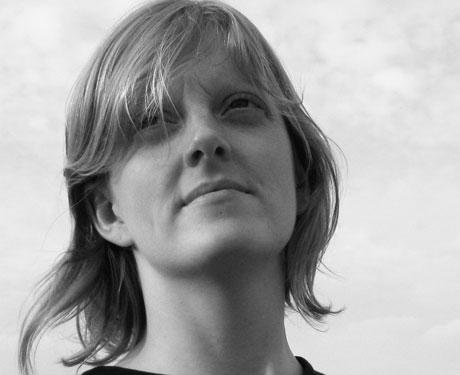
Lucia Frangione is an internationally produced, award winning playwright and actor residing in Vancouver. She has had twenty-five plays produced, including Leave of Absence (Pacific Theatre), Paradise Garden (Arts Club Theatre) and Espresso (Pacific Theatre). Lucia is a recipient of the Gordon Armstrong Award, the Sydney Riske Award and the Stage West CAEA emerging artist award.

Lucia’s work inspires me because it is fiercely uncompromising. When she writes about a contentious subject, such as the role of women within Christianity, she tackles every perspective without simplification. Moreover, she does not hesitate to bring intensely personal experiences to the stage.

How did your playwriting career begin, and was it linked to the beginning of your acting career?

Playwriting, acting and spiritual practice have always been linked for me. I took drama in Grade 12 to get over my fear of public speaking so I could be of service in the church as a minister or teacher. I very quickly adopted the theatre as my church, in a sense, because I prefer to ask questions rather than give answers. I went to Rosebud School of the Arts: sort of a Bible college and theatre school combined. I took acting but I wrote a play my first year there and they liked it so much they paid me and produced it that summer for their dinner theatre. I switched my major to playwriting and studied for four years, but I always performed in my own plays. I continue to do so, but also work independently in both fields. It still is weird for me to write something and not perform in it. It feels like throwing a big party and not attending. [Read more…]

Tetsuro Shigematsu

KamilaInterviewed by Kamila Sediego

Tetsuro Shigematsu has done almost everything. He is or once was: a playwright, a TV writer for CBC’s This Hour Has 22 Minutes, and host of CBC Radio’s The Roundup. He has also worked as a stand up comedian, filmmaker, actor (once with George Takei), Huffington Post columnist, samurai descendent and in-house expert for the MTV/SpikeTV show, Deadliest Warrior, TedTalk presenter, and MC/host/presenter for numerous organizations, festivals, and events across Canada. He wrote his play, Rising Son, an autobiographical one-person show about his relationship with his father, when he was 23 and performed it in cities around the world. The sequel to that play, Empire of the Son will have its world premiere at The Cultch in October of 2015. He is a Vanier scholar and current PhD student at UBC, examining the intersection of race and social media.

Shigematsu also acts as the Artist-in-Residence for Vancouver Asian Canadian Theatre, and was a member of the selection committee for 2015’s MSG Theatre Lab. It was through this opportunity that I got to meet Shigematsu. We talked over the phone about advice, some of the worries emerging writers face, and being an Asian-Canadian writer.

How did you begin this cross-genre career of yours?

I went to art school in college and did my undergrad in fine arts, but the feedback I continuously got from my profs was that the explanations I gave for my artwork were actually more successful than the art pieces themselves. In other words: my artwork wasn’t that good but I should keep talking. At my profs’ encouragement, in lieu of bringing in finished artwork, I would just talk about what happened with my family over the weekend.

Some of these stories were painful to share but I found it therapeutic. What was surprising was that my classmates were laughing a lot. Doing self-reportage and monologues about my personal life was the beginning of my particular practice. I didn’t have any intention of taking it further until I met the couple renting my sister’s place in Montreal. The man was Paul Dervis, who at the time was the artistic director of 21st Century Theatre. After hearing my artsy monologues he said to me, “I’ll tell you what. You’re Japanese. Let’s do a show about that.” That became Rising Son.

[Read more…]

Jason Rothenberg

Screen Shot 2015-10-29 at 9.20.57 AMInterviewed by Hannah van Dijk

Jason Rothenberg is a screenwriter and television producer, best known for developing the hit CW series “The Hundred,” the story of one hundred teenagers who are sent back to earth after a nuclear apocalypse drives the human race into space. Jason serves as both show runner and executive producer, splitting his time between the writing room and set.

Though he’s based in LA, I managed to catch Jason on set in Vancouver, during the filming of the show’s second season finale, only a few days after being renewed for a third season.

When we first meet, Jason is standing in the middle of video village, a collection of monitors and coveted canvas chairs, each bearing the show’s logo and a name. On one side of us is a simple bedroom filled with replica paintings – art preserved during the apocalypse – around which a handful of actors in full combat gear are rehearsing for their upcoming scene. Behind us the dining room, complete with plates of half eaten food, waits patiently for the final sequence that will be shot later this afternoon. If not for the network of electrical cords covering the floor, or the constant background noise of radio chatter, you might believe we really are standing in the heart of Mount Weather, a giant post-apocalyptic fortress and one of the show’s central locations this season. As a fan, I certainly want to.

It strikes me, as I follow Jason off set (the great stone walls sadly revealed to be nothing but plywood and steel cables on the outside), that everything in this world – the blood-soaked extras lined up for the washrooms, the wardrobe department full of skeleton hands and futuristic guerilla armor – has come out of Jason’s head.

During our interview and on set, Jason is remarkably friendly, telling stories and joking with the crew, putting me at ease almost immediately. Towards the end of the day he passes around an iPad displaying a fan’s recap of the most recent episode (which he reads and retweets most weeks). As the executive producer on set, he is constantly interacting with the actors and director, editing dialogue or making notes for post-production. But despite the rush of activity around him, he finds time in between takes to chat with me about his career as a writer and what it’s like to work in television today.

Tell us a little about how you got to where you are as a writer/creator in television.

I always knew I could write, like from the earliest school years. But I didn’t know how to have a job as a writer. I didn’t know what kind of writing I wanted to do. After I graduated, I literally came down to I was either going to write books or screenplays – I had never even read a screenplay before. I looked at them and the screenplay was this thick and the book was this thick, and I was like “Eh, I can write a screenplay more quickly.” Little did I know it’s like haiku, y’know? The length doesn’t make it any easier. So I started writing scripts, and I got lucky pretty quickly. My first script got me an agent, which almost never happens, and eventually it was optioned for no money, but it was a good calling card. Three hundred people in the industry read the script because of my agent and then—I had nothing else. No scripts, no other ideas, no idea what I wanted to write yet, I didn’t really have a voice as a writer. So my agent fired me – or “dropped” me – but that was okay, because then I started to work my way up.

Slowly but surely I got a job as an assistant to a producer, and I met people who were working, developing movies with him, and at some point I probably told one of them that I was a writer and he read something of mine and liked it. So this particular sleazy producer hired me to write a martial arts movie, which was weird because I knew nothing about martial arts. It didn’t matter because he said, “Just get to the fight scenes, and when you get to a fight scene just write fight scene, and we’ll figure it out.” So the script, instead of a hundred and ten pages – it was like 25 pages and 8 fight scenes. The movie never got made of course. But they paid me $8,000, which was a lot of money. Someone was paying me to write. That was kind of cool.

And then I met a guy who was a real legitimate producer. And he hired me to write something for another $8000, but it was a good story, and that script got me another agent and that ultimately found its way to Jodie Foster, and Jodie optioned it, and then developed it for a while and she decided to put it in what they call “turnaround.” I could resell it, essentially, and that script turned out to be my first sale as a screenwriter.

That was like – I don’t want to tell you how much money – I had like $60 in the bank and the next day I had sold a script for seven figures. It was a good day. I thought that that was it. I thought that that was the mountain. You know, I’d been climbing this mountain; it’d been six years from the day I landed in LA to that day. And I thought that was the dream you know? I was going to sell a script, I was going to be a working writer. I never thought I’d sell a script for that much money. Anyway I looked around and I was like “Now what?” And I realized there was just another mountain. I got to the top of this mountain, and I looked up, and oh my god, I still had so far to climb after that. And no one was giving me anything, so I still had to pitch and figure out what I wanted to do.

The script sale and that job were the beginning of fifteen years of nonstop work on huge movies. But nothing got made for those fifteen years. Not because the scripts weren’t good—some of these scripts I wrote I still think are good—but for one reason or another they just don’t happen.

I was making quite a lot of money doing that, because a screenwriter makes his money for the writing not for getting the shit made. So I was getting money, but I wasn’t getting anything shot. I didn’t know how to make a film, I didn’t know how to make a show. I didn’t know anything really.

And then I said okay, well, I’m going to start writing for television. And because I had that feature career I was able to just come right in to television as an executive producer, as someone pitching to the studios. They were interested in what I had to say because I had a name already in the feature side.

I got a pilot made five years ago, and then I wrote a couple that didn’t get made, for Warner Brothers, and then the book proposal of The Hundred came my way and obviously, now we’re going into season three.

[Read more…]

Jenn Engels

jenn and andrewInterviewed by Deborah Vogt

Jenn Engels is an award winning writer and producer, writing for a variety of networks including TMN, HBO Canada, CBC, CTV, Space, Rogers, Hulu, Teletoon, the CW, and SyFy. With a background in acting and stand-up comedy, Jenn has contributed to many of Canada’s top comedies, most notably all four seasons of the critically acclaimed Less Than Kind, Seed, Satisfaction, InSecurity, Dan for Mayor and Mother Up! for Rogers/Hulu. This season marks her debut in both the one-hour and genre worlds, serving as a Writer/Consulting Producer on Bitten for Space/SyFy. Jenn is a born and bred Montrealer but pays taxes in Toronto.

I was so excited to connect with Jenn Engels because I was eager to hear from a female voice working in television comedy. Not to mention, I’m a big fan of Less Than Kind. We corresponded over email.

What TV and film did you watch growing up and who are your major comedy influences?

M*A*S*H* was on in syndication forever when I was a kid, so I watched it at least twice a day for years. In Grade 5 I announced, to my parents’ delight, that I wanted to be a surgeon. I only later realized I just wanted to be Hawkeye Pierce. My other major influence was Steve Martin. I had most of his albums as a teenager and would listen to them ad nauseum. I loved, and still love, his brand of comedy from the seventies: intelligent and very witty, but unabashedly silly. [Read more…]

Jan Wong

IMG_0343-EditInterviewed by Stephanie Kelly

Jan Wong has been living off her words for the past four decades. The Montreal-born journalist majored in Asian studies at McGill University and at 19 moved to China, becoming the first Westerner to study there during the country’s Cultural Revolution, an experience that became the subject of her first book Red China Blues. Wong has been a news reporter, columnist and author, with her byline appearing in some of North America’s most prestigious publications, including the New York Times and the Globe and Mail. In 2006, Wong’s life–both personal and professional– took a dramatic turn. Her story about a shooting at Dawson College in Montreal sparked controversy, leading to a strong backlash from readers, which resulted in her being fired from the Globe. This event led to a long lawsuit between Wong and her former employer, eventually leading her into depression, a story she tells in her most recent book Out of the Blue.

Wong is currently a columnist for the Halifax-based newspaper The Chronicle Herald. She is also a journalism instructor at St. Thomas University in New Brunswick. I was part of Wong’s first class at St. Thomas and will never forget her lectures where she taught us the importance of asking hard questions, finding strong characters, and knowing the subtle but very real difference between percent and percentage points.

Take me back to the time when you first considered writing as a career path.

I guess it was when I was in my 20s and I was still in China. I had gone to China as an undergrad and then a graduate student and I think I began to look at writing as a job once I finished at Peking University and got a job in Hong Kong working on a magazine. It was a start-up and it didn’t last very long. The magazine folded I think in a year and then I came back to Beijing and got a job at the New York Times. That was the period when I thought it was possible to do this for a living.

[Read more…]

Kate Hall

kate-hallInterviewed by Patrick Connolly

Kate Hall is a poet whose first book, The Certainty Dream, was shortlisted for the prestigious Griffin Prize in 2010. She completed her BA and MA in Creative Writing at Concordia University and has since been published in Boston Review, jubilat, PRISM, The Malahat Review, Arc, Denver Quarterly, Colorado Review, and LIT. She is currently on maternity leave from her post at Dawson College in Montreal.

How did you get your start in writing?

I don’t know when I got my start in writing really. I’ve written as long as I can remember, which seems sort of a lame thing to say; probably everyone who is a writer has written for a long time. I wrote when I was kid and as a teenager and I guess somewhere someone decides that the poems are worth reading. I would have kept writing anyway but that’s how it happened. There are two things that happen in getting your start as a writer. One of them is internal and how you feel about your own writing, the creative choices you make, the projects you embark on. Other things you have much less control over like how other people respond. A writer’s work happens so much in the dark, alone and it’s important that someone tell you it’s worth it. I am not talking in the sense of getting published or of having a first book because those things are very different. But somewhere along the line, someone has to tell you that you belong to the poetry. I’m sure every writer has had that experience, although probably they wouldn’t express it in those words. I have also been lucky enough to have had that experience or who knows?

[Read more…]

Roslyn Muir

roslynInterviewed by Jackson Runkle.

Roslyn Muir is a screenwriter, novelist, story editor, and teacher. She is an MFA graduate of the UBC Creative Writing program and has a BFA in Theatre from Simon Fraser University. She grew up enjoying science fiction and is the recipient of the prestigious Praxis screenplay award. She has recently produced a dram film, The Birdwatcher and has written two movies of the week, Anatomy of Deception and Reluctant Witness.

I wanted to interview Muir for three reasons: she has succeeded in writing screenplays in a variety of genres, she is currently developing more, and she manages to do all of this with a family while teaching aspiring screenwriters. That’s what I consider a triple threat. I was fortunate enough to sit down and interview her in person.

How did you become a screenwriter?

My background is really varied. In school I didn’t start out wanting to be a writer. I was really into theatre, and I wanted to be an actor. That’s what I did, I went to SFU and did a BFA in Theatre. I was a performer in both film and theatre. I did a bit of writing, I wrote some plays and performed in them myself. [Read more…]

Sue Goyette

Sue-Goyette 2Interviewed by Ngwatilo Mawiyoo

Sue Goyette lives in Halifax and has just published her fifth collection of poems, The Brief Reincarnation of a Girl, with Gaspereau Press. Her previous collections include The True Names of Birds, Undone, outskirts (Brick Books) and Ocean (Gaspereau Press) as well as a novel, Lures (HarperCollins, 2002).

Sue has been nominated for several awards including the Governor General’s Award for Poetry, the Gerald Lampert, the Thomas Head Raddall Atlantic Fiction Award, the Dartmouth Book Award, the Acorn-Plantos Award and, most recently, the 2014 Griffin Poetry Prize. She won the 2008 CBC Literary Prize for Poetry, the 2010 Earle Birney Prize, the 2011 Bliss Carman Award, the 2012 Pat Lowther Award, the 2012 Atlantic Poetry Prize, Silver in the 2013 National Magazine Awards and the 2014 Nova Scotia Booksellers Choice Award.

Her poetry has appeared on the Toronto subway system, in wedding vows and spray-painted on a sidewalk somewhere in St. John, New Brunswick. Sue currently teaches in the Creative Writing Program at Dalhousie University.

I read Ocean last year and loved its bold ambition, its wit and weight. Sue graciously agreed to an email interview from an unabashed fan.

When did you first begin to take yourself seriously as a poet? 

I’ve always been writing poems. When did my writing practice deepen? Probably when I started writing again in my mid-twenties. I realized then how important my encounters with poetry were. How those encounters informed and orientated my belief and ecosystem. How poetry chimed with something essential in me. How it contributed its own version of vitality to my schedule, and how I had come to rely on it to keep me awake. I was quite young when I had turned to poems, to stories but I trusted their company, their ability to help me feel connected to something bigger and more important than myself. That was key. I don’t feel like it was a choice but more of an opening, like heading in the direction that permitted me to become more me. [Read more…]

Laura McHugh

lauramchughauthInterviewed by Keyanna Burgher

Laura McHugh, with the recent publication of her debut novel The Weight of Blood, has hit the writers’ scene with a vengeance. Her short fiction has appeared in Confrontation and Big Muddy: A Journal of the Mississippi River Valley. And although she has always loved writing, Laura instead chose a more stable career path in software development – until that came to a sudden end and she was forced to start anew. With encouragement from her husband, she began to write her first novel. Vividly set in the foreboding Ozark Mountains, The Weight of Blood explores the mysteries and secrets of small town families. It has since been nominated for a 2015 Alex Award and has been published in many languages. Laura is currently working on her next novel, Arrowood. She lives in Columbia, Missouri, with her husband, two daughters, and dog.

I had the pleasure of receiving Laura’s book as an impromptu gift from my roommate, which I read over the Christmas holidays in a single sitting. I was giddy with writer-crush excitement over the chance to communicate with her. We corresponded via email.

What does a day in the life of Laura McHugh look like?

I get the kids off to school by 7 a.m. (which is way too early–none of us are morning people) and once I’m feeling coherent enough, I start going through emails and social media posts. I spend part of each day fielding requests for book club visits, book donations, interviews, and speaking engagements, answering questions from aspiring writers, and responding to emails and posts from readers. Once I’ve caught up on that, I get to work writing and revising. I usually eat a quick, terrible lunch, like potato chips or cereal, because the kids are out of school by 2:30, and I have to make the most of my quiet time. After school it’s homework, kids’ activities, dinner, baths, whatever minimal housework I have to do to get by. Some nights I have book club or a book talk. If I’m working toward a deadline or trying to finish a chapter or scene, I’ll get back to work once my family has gone to bed. I do my best work when it’s quiet and no one is interrupting me, so if I’m making good progress, I sometimes stay up until three or four in the morning. [Read more…]

Missla Libsekal

(Photo Credit: Florent Meng)

(Photo Credit: Florent Meng)

Interviewed by Joy Richu

Missla Libsekal is the founder and editor of anotherafrica.net, a journal dedicated to contemporary art and design.  A young woman with a keen curiosity about the world, Missla Libeskal was born in Ethiopia, moved to Swaziland and then to Canada, after which she lived in Japan for ten years. She has since lived in New York, and is now settled back in Vancouver, Canada.

I first met Missla during one of the UBC Africa Awareness Initiative Conference Week events, where she led a discussion on art and culture, and their value within conversations about the African continent. Missla graciously agreed to chat with me via Skype! Here are the fruits of our delightful conversation.

When we met a few weeks ago, you mentioned that you began your career in writing having studied a completely different field in university. Could you share a bit about that? What was your university focus? What inspired you to become a writer, and to create an online magazine?

I studied business and management in school, and later worked as a project manager. For ten years I lived in Tokyo, where I worked in a technology company. While there, I encountered front-end designers who were working on all sorts of different concepts and visual treatments, and that was really the first window that I had into storytelling. Even though it was in a visual and interactive manner, I became really enchanted by the idea of how we tell stories.

Writing was something that happened without me willing it or desiring it per se. It was more something I did because I felt it was necessary, rather than because I wanted to be a writer. To be very honest, I’m still very challenged by the term “writer.”- I think we have very classic ideas of what a writer is! All I know is that I use words to communicate. So if we think about it in those basic terms, when you put text down, it means that you’re writing. And that’s what I do. But when you’re doing digital publishing, there are many other elements to play with. There is text, there is audio, there is the interactive aspect as well as moving images, but I see them all as the same thing.

[Read more…]