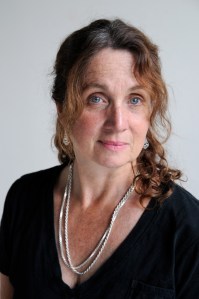
Laura McHugh

lauramchughauthInterviewed by Keyanna Burgher

Laura McHugh, with the recent publication of her debut novel The Weight of Blood, has hit the writers’ scene with a vengeance. Her short fiction has appeared in Confrontation and Big Muddy: A Journal of the Mississippi River Valley. And although she has always loved writing, Laura instead chose a more stable career path in software development – until that came to a sudden end and she was forced to start anew. With encouragement from her husband, she began to write her first novel. Vividly set in the foreboding Ozark Mountains, The Weight of Blood explores the mysteries and secrets of small town families. It has since been nominated for a 2015 Alex Award and has been published in many languages. Laura is currently working on her next novel, Arrowood. She lives in Columbia, Missouri, with her husband, two daughters, and dog.

I had the pleasure of receiving Laura’s book as an impromptu gift from my roommate, which I read over the Christmas holidays in a single sitting. I was giddy with writer-crush excitement over the chance to communicate with her. We corresponded via email.

What does a day in the life of Laura McHugh look like?

I get the kids off to school by 7 a.m. (which is way too early–none of us are morning people) and once I’m feeling coherent enough, I start going through emails and social media posts. I spend part of each day fielding requests for book club visits, book donations, interviews, and speaking engagements, answering questions from aspiring writers, and responding to emails and posts from readers. Once I’ve caught up on that, I get to work writing and revising. I usually eat a quick, terrible lunch, like potato chips or cereal, because the kids are out of school by 2:30, and I have to make the most of my quiet time. After school it’s homework, kids’ activities, dinner, baths, whatever minimal housework I have to do to get by. Some nights I have book club or a book talk. If I’m working toward a deadline or trying to finish a chapter or scene, I’ll get back to work once my family has gone to bed. I do my best work when it’s quiet and no one is interrupting me, so if I’m making good progress, I sometimes stay up until three or four in the morning. [Read more…]

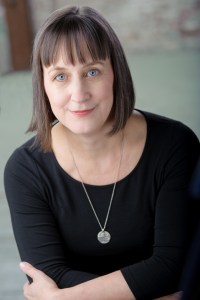
Missla Libsekal

(Photo Credit: Florent Meng)

(Photo Credit: Florent Meng)

Interviewed by Joy Richu

Missla Libsekal is the founder and editor of anotherafrica.net, a journal dedicated to contemporary art and design.  A young woman with a keen curiosity about the world, Missla Libeskal was born in Ethiopia, moved to Swaziland and then to Canada, after which she lived in Japan for ten years. She has since lived in New York, and is now settled back in Vancouver, Canada.

I first met Missla during one of the UBC Africa Awareness Initiative Conference Week events, where she led a discussion on art and culture, and their value within conversations about the African continent. Missla graciously agreed to chat with me via Skype! Here are the fruits of our delightful conversation.

When we met a few weeks ago, you mentioned that you began your career in writing having studied a completely different field in university. Could you share a bit about that? What was your university focus? What inspired you to become a writer, and to create an online magazine?

I studied business and management in school, and later worked as a project manager. For ten years I lived in Tokyo, where I worked in a technology company. While there, I encountered front-end designers who were working on all sorts of different concepts and visual treatments, and that was really the first window that I had into storytelling. Even though it was in a visual and interactive manner, I became really enchanted by the idea of how we tell stories.

Writing was something that happened without me willing it or desiring it per se. It was more something I did because I felt it was necessary, rather than because I wanted to be a writer. To be very honest, I’m still very challenged by the term “writer.”- I think we have very classic ideas of what a writer is! All I know is that I use words to communicate. So if we think about it in those basic terms, when you put text down, it means that you’re writing. And that’s what I do. But when you’re doing digital publishing, there are many other elements to play with. There is text, there is audio, there is the interactive aspect as well as moving images, but I see them all as the same thing.

[Read more…]

Billeh Nickerson

billeh_main_20140508Interviewed by Shannon Rayne

Billeh Nickerson is a poet, performer, editor and teacher. He is the author of four poetry collections of poetry —The Asthmatic Glassblower; McPoems; Impact: The Titanic Poems; and Artificial Cherry— and the humour collection Let Me Kiss It Better. He is also co-editor of Seminal: The Anthology of Canada’s Gay Male Poets. His most recent book, Artificial Cherry, was shortlisted finalist for the 2014 City of Vancouver Book Award. He is the Chair of the Creative Writing department at Kwantlen Polytechnic University.  www.billeh.com

You incorporate a lot of humour, sarcasm, wit and irony in your poetry – making both your poetry and your readings a joy to encounter. What are the advantages of using humour as a writing tool for you?  What does it allow you to do in your writing? 

Hmmm, that’s an interesting question as I find that humour has been beneficial to my work, but it also causes some folks to undervalue what I do. I love it when readers let their guard down after laughing. That’s the best time to pull a knife of an image or situation on them. That ability is the advantage. It can also start the conversation on taboo and political topics. [Read more…]

Judith Thompson

JUDITH hi RESInterviewed by Indu Iyer

Judith Thompson is one of Canada’s foremost theatre artists. She is a graduate of the National Theatre School, a two-time winner of the Governor General’s Award for Drama, and a recipient of the Order of Canada. Her most noted plays include The Crackwalker, White Biting Dog, and Lion In The Streets. Alongside playwriting, she co-creates and directs independent theatre projects, is a professor of Creative Writing at Guelph University, and on occasion, also performs.

A fellow thespian, I have long admired her work for its melange of humility and audacity. It was a huge privilege to pursue this dialogue with her. We corresponded via email.

Why theatre?

Because theatre is now. Because theatre combines the music of the human voice in spoken word, the text that is every movement, and a concentrated space. And it has an ancient tradition. [Read more…]

Kurt Armstrong

kurt-armstrongInterviewed by Thomas Guenther

Kurt Armstrong is a lay minister and handyman at Saint Margaret’s Anglican in Winnipeg, MB. He is a former editor at Geez magazine, the author of an essay collection, and a former adjunct professor at Providence University College, a small Christian Liberal Arts school outside of Winnipeg.

That’s where I first met him. I took his class in my first semester of university. It was initially called Writing for the Media, but the first day he re-christened it Creative Non-Fiction.

Creative Non-Fiction is Armstrong’s strength. In addition to writing for Christian publications such as Geez Magazine, he has written for The Globe and Mail and CBC’s Vinyl Café.

In 2011 Armstrong won a Canadian Christian Writing Award for his article “Jesus loves your penis, son,” a clear and honest piece about developing sexuality and its regularly misconstrued place and purpose in Christian dialogue.

That same year his book Why Love Will Always Be a Bad Investment was published. It contains 17 of Armstrong’s essays on love, marriage, and having children. He writes that these three life events are excellent, but costly. They are full of sacrifice and self-denial, but are worth it all if you don’t quit.

He is married and has three children.

When did you know you wanted to be a writer?

I’d kept a journal since I was 14, but never thought of myself as a writer until I was 27. I was in grad school, and flew to Australia to be best man for a friend’s wedding.

The night before the wedding I scribbled out a toast to the groom, and when I read it on the day of, I had the audience howling with laughter and weeping at the end. I didn’t know my writing had power like that. That was probably the first moment I felt like I could be a writer. [Read more…]

Linda Svendsen

linda_book_photos-002Interviewed by Emily Swan

Linda Svendsen is an acclaimed Vancouver writer, leaving her mark on both fiction and television. Her story collection, Marine Life, was published by Farrar Straus and Giroux (U.S.), HarperCollinsCanada, and Residenz Verlag (as Happy Hour) in Germany. The stories appeared in the AtlanticSaturday NightO. Henry Prize StoriesBest Canadian Stories, literary magazines in the U.S. and The Norton Anthology of Short FictionMarine Life was nominated for the LA Times First Book Award, the Ethel Wilson Fiction Prize, and produced as a Canadian feature film.

After her children arrived, Linda focused on television for almost two decades. With her husband, Brian McKeown, she co-produced and co-wrote the miniseries, Human Cargo, which garnered seven Gemini Awards, including Best Movie or Miniseries, Best Screenplay, and a George Foster Peabody Award. Other long-form writing credits include Murder Unveiled (with Brian McKeown), At The End of the Day: The Sue Rodriguez Story, and The Diviners, adapted from the Margaret Laurence novel. She has written episodes for Airwaves and These Arms of Mine. In 2006, she received the John Simon Guggenheim Fellowship.

Sussex Drive (Random House Canada, 2012), a satire exploring what happens when a Conservative Prime Minister’s wife and a leftish Governor General can no longer play “Follow the Leader,” is Linda’s most recent publication. It’s a novel.

Linda has been a faculty member in the Creative Writing Program at UBC since 1989. In her twenty-five years with the department, she has helped and inspired all manner of students looking to hone their own crafts. Having been inspired by Linda myself, I reached out to her over email to learn more about her journey with writing.

How were you originally drawn to a career in writing? I know (from extensive, online stalking) that you attended classes in creative writing while pursuing your BFA in English. Was this what first attracted you to the field?

In Grade 2 and 3, I became hungry to read and write. I was an only child and on Saturdays my father would have visitation rights for the day and he took me to bookstores and he bought me as many books as I wanted. I started a sequel to Tom Sawyer. I wrote the start of a Bobbsey Twins mystery…and I wrote through high school and have never looked back. I lie. Except for a few detours into acting, anthropology, and codependency, all of which became grist for the mill. [Read more…]

Hal Sirowitz

sirowitzInterviewed by Lang C. Miller
Photo by Kim Soles

Hal Sirowitz is an internationally known poet and the author of five books of poetry: Mother Said; My Therapist Said; Before, During and After; Father Said; and Stray Cat Blues. His work has been translated into thirteen languages and published in many anthologies and magazines. He was awarded the Nebraska Book Award for Poetry, a National Endowment for the Arts Fellowship, and a New York Foundation for the Arts Fellowship. He is also the former Poet Laureate of Queens, New York. Hal has performed and appeared on MTV’s Spoken Word Unplugged; Lollapalooza; Edinburgh’s Fringe Festival; the Helsinki International Poetry Festival; the Jerusalem Conference of Writers and Poets; PBS’s Poetry Heaven; NPR’s All Things Considered; PBS’s The United States of Poetry and Fresh Air with Terry Gross. Garrison Keillor has read many of Hal’s poems on NPR’s The Writer’s Almanac and he has included Hal’s poems in his anthologies Good Poems and Good Poems for Hard Times.

Hal Sirowitz is a retired New York City public school teacher. He lives with his wife, the writer Minter Krotzer, in Philadelphia.

Your poems always seem to be lightened up with humour, and that especially comes through when you perform them. How important is comedy to you in your writing?

I always saw myself as a poet, though some people in the audience thought I could make it as a comedian. Once, I met a radio personality from upstate New York who owned a comedy club in Binghampton. He arranged for me to perform with a comedian. The guy was a hypnotist who would get women in the audience to get on stage to pretend to strip. His audience – he was the opening act – didn’t like me. That was the end of my comedian career. I think there’s a fine line between comedy and my work. Unlike most comedians I only make fun of myself, never others. I’m thinking of Joan Rivers’ Elizabeth Taylor’s jokes. My poetry is a blend of humor and seriousness. When I’m writing I usually don’t try to be funny. My work has to look good on the page, unlike most comedians who couldn’t care less. [Read more…]

Annabel Soutar

soutarInterviewed by Sasha Singer-Wilson

Playwright and theatre producer Annabel Soutar founded the theatre company Porte Parole Productions in Montreal with Alex Ivanovici in 2000. She has acted as Artistic Director of the company ever since. Soutar’s most recent play Seeds was published in both English and French and presented across Canada in 2013-14. In 2012 she was commissioned with director Chris Abraham to write a new documentary play – The Watershed – about fresh water for the 2015 Toronto Pan American/Para Pan American Games cultural program.

I first experienced Soutar’s work in 2012 when I saw a production of Seeds at the Young Centre for the Performing Arts in Toronto. It was my first encounter with documentary theatre and the form excites me greatly. It marries my love of theatre with my desire to create dialogue about current events and social and environmental issues. For this interview, we spoke on the phone, Soutar in Montreal and me in Vancouver.

Did you want to write from the time you were young?

Not at all. I never thought of myself as an “artist.” I tended to do well in subjects like math and history. I didn’t study theatre until my second year of university. And I didn’t participate as an actor, writer, or director until my late teens or early twenties.

I went to university at Princeton, in New Jersey. The one fundamental thing that they teach there, no matter what you study, is that you should learn how to write. I took history, English, and some theatre. I found that I thought differently in my theatre classes than I did in any of the others. When asked to perform a role written by a playwright from a hundred years ago, I learned more about history than I did in a history class.

I discovered the early documentary plays of Anna Deveare Smith when they premiered at the McCarter Theatre in the town of Princeton. She’s probably one of the most successful practitioners of the documentary form in North America. Her plays have not only been produced on Broadway but have had an impact on the communities where they were presented. Her plays showed me how theatre connected with my other interests, like, history, politics and journalism. They showed me that theatre wasn’t just about exploring themes from the past or entertaining an audience with a titillating drama; it actually allowed us to take a look at what was going on in our communities. Seeing her work made me realize that not only did I want to study theatre, I wanted to practice it. Not only did I want to practice it, I wanted to practice it in this way. [Read more…]

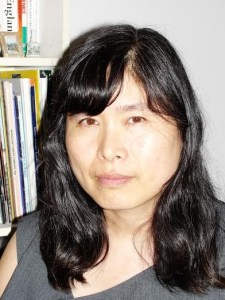
Elaine Woo

Elaine WooInterviewed by Yilin Wang

Elaine Woo is a Vancouver-based poet, librettist, and non-fiction writer. Cycling with the Dragon, her debut poetry collection, was published by Nightwood Editions in 2014 and recently nominated for the George Ryga Award for Social Awareness. Her writing has also appeared in ARC Poetry Magazine, carte blanche, Ricepaper Magazine, Cha: An Asian Literary Journal, and V6A: Writing from Vancouver’s Downtown Eastside. Her art song collaboration with Daniel Marshall, “Night-time Symphony,” won a festival prize in Boston Metro Opera’s International Composers’ Competition. She holds a BFA in Creative Writing from UBC and has taught workshops for Megaphone Magazine and the Historic Joy Kagawa House. http://www.elainespath.org

I first met Elaine at the launch of Ricepaper Magazine’s Fall/Winter 2012 special double issue featuring Aboriginal and Asian Canadian writers. We both read at the launch, and since then, I have had the pleasure of listening to her read at many other events. Her writing explores marginalized voices, race, gender, family dynamics, and the creative process with raw emotion and experimental language. I corresponded with Elaine via email to discuss her inspiration, the publication of her first book, and her thoughts on a writer’s social responsibility.

What inspired you to first begin writing?

Creativity is my calling: I’ve always been creative, drawing prolifically as a child until my late teens. My twenties and thirties were fallow years, devoted to schooling in experimental psychology and working as a clerk/secretary. The psychology I studied had nothing to do with the soul, much to my disappointment. By mid-life, I had a lot of stories stored up inside. In 2006, when a couple of friends suggested I take up writing, I signed up for a credited creative writing course at Capilano College (before it became a university) and that was the start of my becoming actualized and whole again. Writing gave me everything to do with the intellectual, social, philosophical, and spiritual in the 21st century. [Read more…]

Catherine Banks

Catherine Banks photoInterviewed by Sarah Higgins

Catherine Banks is a renowned, award-winning Canadian playwright. She received the Nova Scotia Established Artist Award in 2008 for her body of work and has won the Governor General’s Literary Award for Drama twice – in 2008 for Bone Cage and in 2012 for It is Solved by Walking. The latter was translated into Catalan by the Tant per Tant theatre company and toured Barcelona in 2012. Her other works include Three Storey, Ocean View and Bitter Rose (which also aired on Bravo! TV’s Singular Series). Her latest work, Miss ‘n Me, will premiere as a Sarasvati Theatre production in Winnipeg in May, 2015.

Banks’ plays reflect the rhythm of life in rural Nova Scotia with humour, pathos and poetry. Through the particularities of specific lives, she expresses universal stories – and through the universal stories, she highlights the particular highs and lows of life in the Maritimes.

I had the pleasure of hearing her read from It is Solved by Walking at an event in Halifax several years ago, and the beauty and breath of her work enthralled me. I was grateful to be able to chat with her, over email, about her craft.

Let’s start at the start – how did you get into playwriting? Or, what was your first experience of theatre, and did that inform your choice of genre?

I grew up around my father’s family of storytellers and wits. I acted in high school and university and even wrote a monologue for my one theatre class ever (acting) but it really wasn’t until I saw Michel Tremblay’s Les belles soeurs that I understood that I had something to write about—up until that point I thought writers lived exotic lives. Tremblay characters were so grounded in real life that I understood that I had lots to write. I have said many times that the first time I sat down and wrote dialogue I felt I had come home. [Read more…]