Whiskey Blue

blue2Interviewed by Becca Clarkson

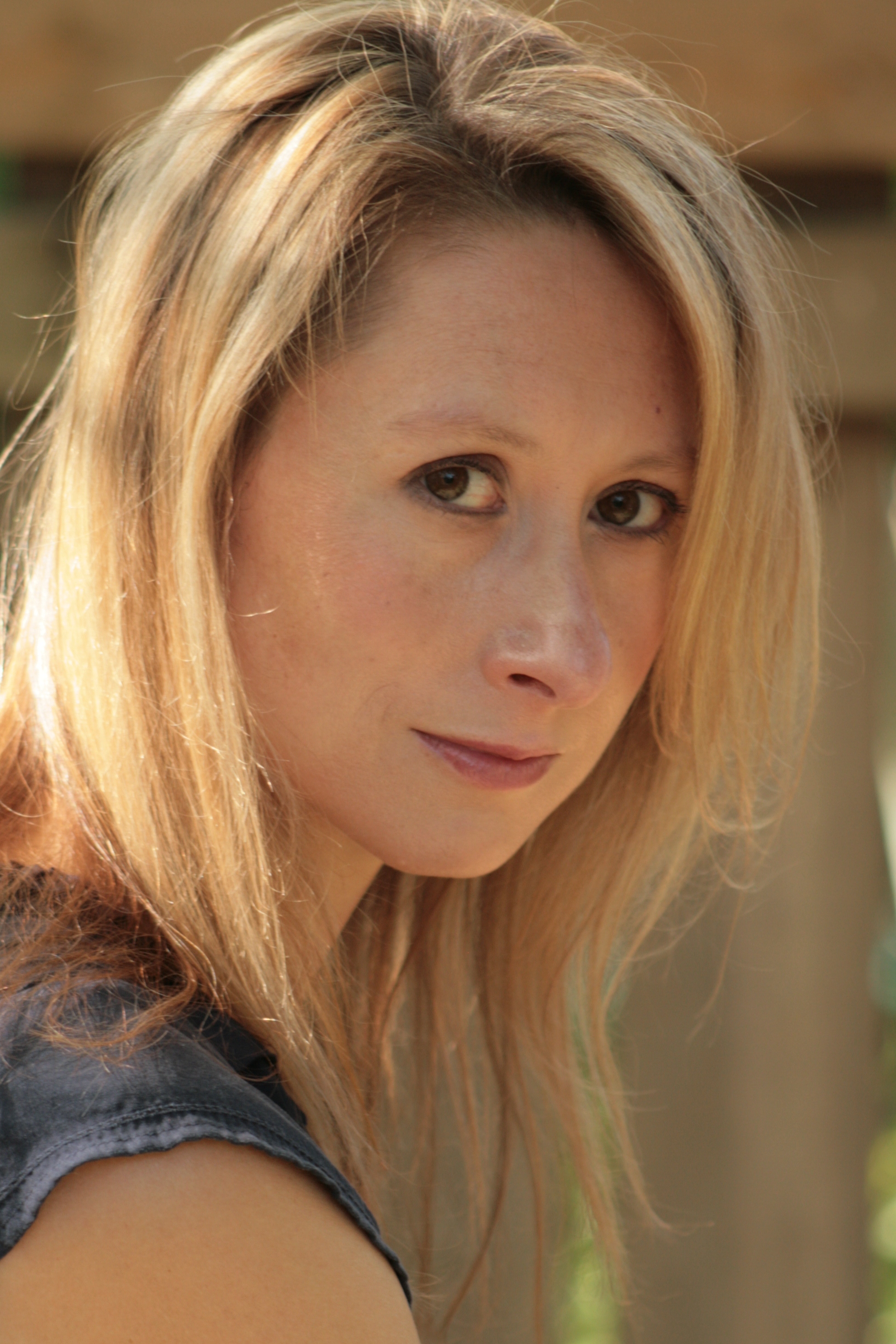
Whiskey Blue is the author of Brooklyn Love, a collection of literary erotica or ‘fine lesbian smut.’ She is also a contributor to Psychology Today, advice columnist extraordinaire for Everyone is Gay, and has published with The Huffington Post, The Atlantic, AfterEllen, Curve Magazine, Bitch, and more. You can follow her at @topshelferotica.

Whiskey reached out to me two years ago when my older sister, her close friend, told her that I’d been accepted into UBC’s Creative Writing Program. Her genuine interest, sincere advice, and impressive range of publications stuck with me and made her an obvious choice to interview, years later. Luckily, the Brooklyn-based writer moved back to Vancouver in 2014, and we were able to meet for coffee at Turks on Commercial Drive. It should also be noted that Whiskey is a very savvy dresser, and took the time to discuss our mutual love of the television series Broad City once the interview was done.

I’ve been struggling how to word this question so that it doesn’t sound like I’m encouraging kids to do drugs and not prioritize school. In your article “Coming Out in Psychology Today, you describe your adolescence as hard—not because you’re a lesbian, but because being an adolescent sucks for everyone. You also describe experimenting with ketamine and frequenting raves at that time. After high school though, you went on to work in a law office and wear power suits, and now you’re a successful writer who people seek advice from in columns! I guess I was hoping to hear your take on the anxiety many students feel about not being successful enough, or the best in their program, sleeping in, drinking too much, etc. Do you that your lack of focus on a specific career, perfect resume and cover letter, etc., affected how you became the writer you are today?

When I was in high school I was a really bad kid. I was doing bad things: drugs, dropping out of school—it took me a very long time to get my high school diploma. I was always feeling like a little bit of an outlaw. By my late teens and early twenties I was so off the grid that I wasn’t really worried or thinking about getting a degree and going down a certain path to get a certain job. I’m not saying it’s a good thing to exist in these parameters but it was definitely my reality. When I did go back to school, I never felt like taking creative writing would make me a writer, I just wanted to go to school instead of bartending and working so many jobs, and have X amount of hours a week for writing. School allowed me to spend X hours in class, surrounded by peers who are also thinking about writing, and be with mentors and teachers who know more about writing than me. I felt like that would create inspiration and opportunity but I never really saw university as a track to a career in the way one might if they’re taking engineering. A part of what makes writing so difficult and annoying is that there isn’t really this straight line or path. I think that a lot of the writers that I’m interested in didn’t take a very straight path either though. To feel on the outside is a pretty valuable and, I think, very typical experience for a writer. To feel like you don’t know what you’re doing, or feeling bad for sleeping in or not doing enough, that’s part of the experience. It’s good for a writer to be a little bit of a fuck up. [Read more…]
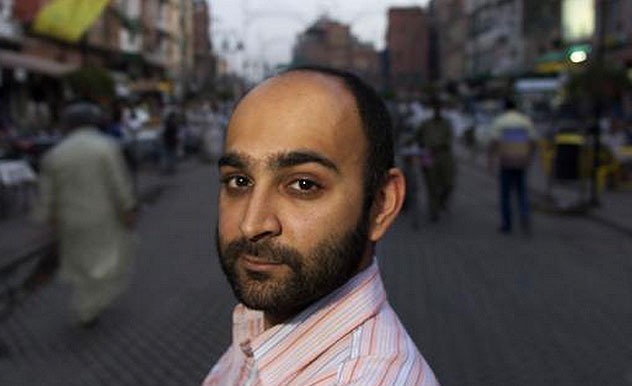
Mohsin Hamid

hamidInterviewed by Rumnique Nannar

Mohsin Hamid would prefer that you to call him a “nomadic novelist.” Hamid is the author of Moth Smoke, The Reluctant Fundamentalist, and How to Get Filthy Rich in Rising Asia, but each of these novels were written in between continents. Hamid summoned his memories of 1990s Pakistan in Princeton, conjured up a post-9/11 New York in London, and shaded in an unknown metropolis while in Pakistan. His latest book Discontent & Its Civilizations is a collection of essays that touch on Islamophobia, travel, and global politics.

Hamid’s writing is consistently stylish and daring as he breaks down the boundaries between reader and story. Whether it is the dramatic monologue in The Reluctant Fundamentalist, a breakout book that hit the New York Times’ bestseller list, or the second-person narration in Filthy Rich, Hamid’s novels involve the reader in its narrative. We chatted over Skype about his journey as a writer, father, and even his favourite TV shows. (Spoiler alert for GoT fans!)

How did you start or decide to become a writer?

As a little kid, I was a big reader. I probably started with comic books and children’s stories, and then kept reading throughout my childhood and teens. I’m also quite a fantasist, so I would imagine countries and I loved atlases. I used to imagine little countries where no countries existed, and I was into Dungeons and Dragons as a kid (laughs). All of these things, in a way, were a real absorption into storytelling. When I went to university in the States, Princeton had a wonderful creative writing program with Joyce Carol Oates and Toni Morrison. I remember applying for one of the first creative writing workshops and getting in, and starting to write stories for them. Very quickly I realized that this was what I loved to do. So it was in university for the first time that I thought, I would like to be a professional writer. [Read more…]

Chris Abani

ChrisAbaniBytClausGretterInterviewed by Indu Iyer

Chris Abani is an acclaimed author whose most recent novel is The Secret History of Las Vegas. He is the recipient of a Guggenheim Fellowship, the PEN/Hemingway Award, the PEN Beyond the Margins Award, the Hurston Wright Award, and a Lannan Literary Fellowship, among many honours. Born in Nigeria, he is currently a Board of Trustees Professor of English at Northwestern University. He lives in Chicago. More at: http://www.chrisabani.com

My desire to connect with Abani comes from the potency and immensity with which his words have given me, and no doubt countless others, great inspiration to move forward in difficult times. We corresponded via email.

How did your journey as a writer begin, and what have been your most pivotal moments in this field?

I began writing very young. I published my first short story at ten and my first novel at 16. I can’t remember not being a writer. I would say that the most pivotal moment was publishing my first novel so young. It set me on the path that has become my life. [Read more…]

Eden Robinson

Eden RobinsonEden Robinson

Interviewed by Stephanie Chou

Eden Robinson is an internationally acclaimed author from Kitimat Village, BC. She is a member of the Haisla and Heilstuk First Nations. Her debut book, Traplines, a collection of four short stories, was a New York Times Notable Book and won Britain’s Winifred Holtby Memorial Prize. Her first novel, Monkey Beach was nominated for the Giller Prize, the 2000 Governor General’s Award for Fiction and won the Ethel Wilson Fiction Prize. The novel was also selected as a Globe and Mail Editor’s Choice. It was the first English-language book to be published by a Haisla writer. Her most recent novel is Blood Sports, and her extended essay Sasquatch at Home, first delivered as a talk at the 4th annual Henry Kreisel Lecture, explores modern storytelling through a blend of personal anecdotes and the intricacies of cultural protocol.

Eden Robinson has the most contagious laugh on this side of the globe. She shares a birthday with Edgar Allan Poe and Dolly Parton and is certain this affects her writing in some way. Combine these sensibilities with her early influences of Stephen King and David Cronenberg, and it’s natural that Eden’s writing is at once humorous and dark. As a long-time admirer of Eden’s work it was my absolute pleasure to interview her via email.

Eden received her MFA from UBC’s Creative Writing Program and is the program’s Virtual Writer-in-Residence for the Fall 2014 term.

What moves you to write? You’ve said that your characters have “sprung from your muse.” Can you explain that compulsion? 

People are intricate puzzles, and I find myself wondering how their minds work, and then try to put myself in their boots and then see where the story goes. For instance, I was listening to NPR and the Unibomber’s brother was being interviewed. He spoke very movingly of the moment when he realized his brother might be a murderer and the emotions he went through and what he knew it would do to their family, to his brother, to himself. I was haunted by him, and that’s where my muse steps in, that’s when he whispers in my ear. The resulting story was “Dogs in Winter,” whose title comes from the opening scenes of The Cook, the Thief, his Wife and her Lover. How the two things became joined in my mind is one of those quirks that I find hard to explain. [Read more…]

Elisabeth de Mariaffi

Elisabeth de Mariaffi_HowTOGetAlongWithWomen

Interviewed by Christopher Evans
Author photograph: Ayelet Tsabari

Elisabeth de Mariaffi’s debut story collection, How to Get Along with Women (http://invisiblepublishing.com/?p=30 ), was longlisted for the Scotiabank Giller Prize and shortlisted for the ReLit Award in 2013. Her work has won the Lawrence Jackson Writers’ Award , appearing in the New Quarterly, The Fiddlehead, This Magazine, Prairie Fire and more, and she was one of the masterminds behind the unique Toronto Poetry Vendors project (http://torontopoetryvendors.wordpress.com/). A graduate of Guelph University’s Creative Writing MFA program, de Mariaffi has recently moved from her hometown of Toronto to St. John’s, where she lives with her husband, the writer George Murray (http://georgemurray.wordpress.com/), their combined bevy of children, and one noisy dog. De Mariaffi’s first novel, The Devil You Know (http://www.harpercollins.ca/books/Devil-You-Know-Elisabeth-De-Mariaffi/?isbn=9781443434744), is a literary thriller set in 90s Toronto and will be available in January 2015.

I was fortunate enough to meet Elisabeth when she visited UBC earlier this year and read How to Get Along with Women shortly thereafter. It’s an incredible collection—sharp, intimate, and wry. I reached her through email at her home in St John’s.

Let’s start with something easy: what is your current day job? Besides financial stability, how have your day jobs affected your written work?

Right now I’m the marketing coordinator at Breakwater Books, an indie publishing house here in St. John’s. I’ve been at it since 2012, and for the first two years it was a full-time gig—now we’ve split it into a job-share, where I handle mainly publicity (rather than sales) and only work two and a half days a week. The thing about day jobs, at least for me, is that they are really mainly about financial stability and if I stop and think about it too much, the effect on my writing feels mostly like, “I get to write less,” and that’s a bit depressing and counter-productive.

Having said that, there are real pros to day jobs, beyond finances. I once spent a year working as flight crew. I was a purser on Porter Air, which means I’m the flight attendant who stands up front and tells you what to do and is basically in charge of the cabin. Ninety-five percent of the training for that job is emergency evacuation scenarios and drills, which is stellar if you have a loopy imagination. You travel all the time, you’re constantly out of your element, which I think is good for the interior life of the writer. And mid-flight, you’ve got a ton of time to stare out the window at the clouds—also good. But did I use all that time in strange hotel rooms to write? I did not. I was very tired from flying and I just wanted to go have a beer.

Working in book marketing, you get to have relationships with festival directors and booksellers and reading series coordinators, and then they know your name, which is handy. And I do think that working a full-time job, you learn to value your writing time and, moreover, your ambition. I’ve become very efficient at both my day job and my writing over the years, in order to live up to my own expectations. [Read more…]

Richard Dansky

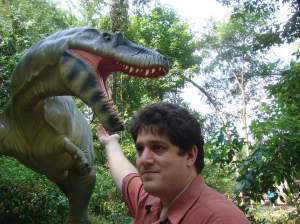
Dansky Dinosaur PicInterviewed by Kimberley Ann Sparks

Writer, game designer and cad, Richard Dansky was named one of the Top 20 videogame writers in the world in 2009 by Gamasutra. His work includes bestselling games such as TOM CLANCY’S SPLINTER CELL: CONVICTION, FAR CRY, TOM CLANCY’S RAINBOW SIX: 3, OUTLAND, and SPLINTER CELL: BLACKLIST. His writing has appeared in magazines ranging from The Escapist to Lovecraft Studies, as well as numerous anthologies. The author of the Wellman award-nominated VAPORWARE, he was a major contributor to White Wolf’s World of Darkness setting with credits on over a hundred RPG supplements. Richard lives in North Carolina with his wife, statistician Melinda Thielbar, and their amorphously large collections of books and single malt whiskeys.

I know Richard through the IGDA (International Game Developers Association) Writers Special Interest Group forum, and we first met at the Game Developers Conference. This is a hybrid phone/e-mail interview. It started on the phone, but my recording device broke and I couldn’t record it, so I thought I’d type as we spoke, but that didn’t work out so well. Richard was kind enough to fill in the gaps via e-mail. He’s a swell guy and an awesome writer, whose work I’ve admired for a good long time.

Can you describe what a video game writer does?

What I do is I work on the narrative elements of the game. In a real sense, I create game assets that are made of words. I’ll work on story, developing characters, world-building. I’ll write dialogue and in-game artifacts, such as journal entries, files, radio transmissions, etc. I also write text in menus that aren’t related to story at all for UI (user interface) elements, or I’ll be asked to help name achievements. Whatever’s called for, really. [Read more…]

Lee Maracle

Aboriginal authorsInterviewed by Francine Cunningham

Lee Maracle is the author of many critically acclaimed literary works including Sojourner’s and Sundogs, Ravensong, Bobbi Lee, Daughters Are Forever, Will’s Garden, Bent Box, and I Am Woman; and the co-editor of anthologies including the award winning My Home As I Remember. She is also co-editor of Telling It: Women and Language across Culture. She was born in North Vancouver and is a member of the Sto: Loh nation.

The mother of four and grandmother of seven, Maracle is currently an instructor at the University of Toronto. She is also the Traditional Teacher for First Nation’s House and instructor with the Centre for Indigenous Theatre and the S.A.G.E. (Support for Aboriginal Graduate Education) as well as the Banff Centre for the Arts writing instructor. In 2009, Maracle received an Honorary Doctor of Letters from St. Thomas University. She recently received the Queen’s Diamond Jubilee Medal for her work promoting writing among Aboriginal Youth. Maracle has served as Distinguished Visiting Scholar at the University of Toronto, University of Waterloo, and the University of Western Washington.

What made you realize you wanted to be a writer?

It’s sort of hard to tell you know. I was a little girl and I remember lying to my granddad and him staring at me for a long time and then telling me it was a good story. After that he started telling me stories and then telling me to tell them back to him, different but the same. We played that game quite a lot. When I was older I came across Legends of Vancouver by E. Pauline Johnson, about Capilano and his wife Mary Agnes both telling stories to E. Pauline. I really liked how they told the double headed serpent story, like it was going on right then, and I remember talking to my granddad about that and he called it myth making. You know, we’re supposed to tell stories that way, we don’t tell stories for no reason. When somebody needs a story you tell it to them, but you tell it to them like it’s happening now so that they’ll get the lesson in it. Also, when it comes to myth making, there is a kept version— somebody is the keeper of the story—and everybody else tells the sort of fictitious version or the “un-kept” version. That’s applicable to today, and I decided those were the kind of stories I wanted to write. It took quite a long time to get to the place where I thought I could write those kinds of stories. [Read more…]

Billy Kahora

kahora from kwaniInterviewed by Ngwatilo Mawiyoo.

Billy Kahora is the author of The True Story of David Munyakei, a non-fiction novella about Kenya’s biggest whistleblower, and the screenwriter for Soul Boy, a Kenyan film that was nominated for five African Movie Academy Awards. His short story “Treadmill Love” was highly commended by the judges for the 2007 Caine Prize (the Caine Prize is the preeminent prize for African fiction) and in 2012 his short story “Urban Zoning” was shortlisted for the same. Billy’s writing has appeared in Granta, Kwani?, Chimurenga and Vanity Fair US. He was a Regional judge for the 2009 Commonwealth Writers’ Prize.

Billy is also the Managing Editor of Kwani?, a leading African literary magazine based in Kenya. Kwani? is Kiswahili for “So what?”

In 2008 I interned at Kwani Trust, the Nairobi-based literary network that develops, publishes and distributes contemporary African writing, and worked as Billy’s Editorial Assistant. I’ve since done some editorial work for Kwani?, their flagship publication. I reached out to Billy for this interview both because I wanted to share one of my literary forbearers with my new space in Canada, but also because I haven’t been able to have much of this kind of conversation with him, and was grateful for the excuse.

Did you always know you would be a writer growing up?

No, I didn’t know I wanted to write when I was a kid, I just read a lot ‘til I was in my teens. When I couldn’t find anything to read that satisfied my curiosity, anger, and admiration for all the things I was seeing and experiencing around me, that’s when I thought about recreating my immediate conditions. I did it for fun until things seemed to get worse around me like they do for all teens. I realized then that I had to take this “replication” of my surroundings a bit more seriously. After that writing became my default way of trying to explain the world, life and all else. The denial that this is what I wanted to do went on for a long time and still goes on. [Read more…]

Alberto Manguel

Alberto Manguel Pic2Interviewed by Charles-Adam Foster-Simard

Alberto Manguel was born in Buenos Aires in 1948 and is one of the world’s most renowned bibliophiles. He is also an accomplished novelist, essayist, translator, editor, and anthologist—he has written and edited over 40 books since 1980, including reader favourites like The Dictionary of Imaginary Places, A History of Reading, The Library at Night, and All Men Are Liars. In 2007, he delivered the CBC Massey Lectures titled The City of Words, which was published as a book by House of Anansi Press. Manguel currently lives in France, in a renovated medieval presbytery that also houses his 30,000 books.

I approached Mr. Manguel by letter in order to ask him if he would be amenable to this interview. He informed me that he has recently acquired an email address and agreed to answer my questions electronically.

You moved a great deal throughout your life. You were born and grew up in Argentina (and in Israel for several years), and then spent some time in Italy, Tahiti, England, Canada, and France, where you now reside full-time. Generally, what was a common impetus behind these moves, and in what country did you feel more comfortable and supported as a writer?

Chance. Borges has a story in which a man spends his life travelling, criss-crossing the world, doing all sorts of things. At the end of his life, he looks at the line his movements have traced and it depicts the features of his face. Maybe that’s what all my travel is about: an exercise in self-portraiture.

What country I feel most comfortable in? I judge my comfort through the place I’m in and the people I’m with, not a country in general. Countries are too vast and multifaceted for that. Where am I most supported as a writer? Curiously enough, countries in which I don’t live: Turkey, Spain, Brazil… [Read more…]

Gail Carson Levine

Interviewed by Monika Davies

gailcarsonlevine_photoGail Carson Levine has been a prolific children’s author since she published her debut novel, the widely beloved Ella Enchanted, a 1998 Newbery Honor Book. She has since published a remarkable collection of novels for young readers, including Dave at Night, an ALA Notable Book and Best Book for Young Adults, Ever, Fairest, The Wish, The Two Princesses of Bamarre, The Fairy’s Return, A Tale of Two Castles, and several others. She is also the author of two picture books, Betsy Who Cried Wolf and Betsy Red Hoodie, the nonfiction Writing Magic: Creating Stories That Fly, as well as her newest, Forgive Me, I Meant To Do It, False Apology Poems.

Gail has a keen sense for what will resonate with young readers, and her characteristic wit and humour are key aspects of all of her published works. She is also a great encourager and supporter of budding authors, and her blog is a robust compilation of advice for writers young and old.

Having grown up immersed in the imaginative and colorful worlds of Gail’s novels, I was delighted to have the chance to interview her via email from her home in Brewster, New York.

Who were the writers you admired most when you first began writing? Which authors most excite you now as a reader?

I began writing for children when I was thirty-nine, and I read most of the Newbery bookcase at my local library. I especially loved Joan Aiken and E. L. Konigsburg. At the moment, oddly enough, I’m a full-time student going for a Masters of Fine Arts in poetry, and poetry is what I’m reading. I admire Sharon Olds, Ted Kooser, James Wright, Robert Hayden, Lisel Mueller, and many more. [Read more…]