Ian Williams

ian-williams-author-photo_0Interviewed by Jennifer Spruit

Ian Williams is the author of Personals, shortlisted for the 2013 Griffin Poetry Prize and the Robert Kroetsch Poetry Book Award; Not Anyone’s Anything, winner of the 2011 Danuta Gleed Literary Award for the best first collection of short fiction in Canada; and You Know Who You Are, a finalist for the ReLit Prize for poetry. He was named as one of ten Canadian writers to watch by CBC.

Not only does Ian write short stories packed with the power of precision and disarming poetry that holds our very us-ness up to the glare as it is refracted back, he’s also working on a novel I’m eagerly anticipating.

I’ve been an admirer of Ian’s writing for some time, and have especially enjoyed his blog, on which I found out he’s a man who prefers a well-dressed serif font. Ian was kind enough to chat with me via email.

Your short story collection, Not Anyone’s Anything, includes simultaneous narrators, flashcards, and a story with a basement. How do you, as a writer, balance reader experience and expectations for how to approach a text with a desire to create something original?

Each story needs a feature that’s formally interesting. If I wrote “While” and “Not Anyone’s Anything” and “Break-In” with the good manners of Dickens, say, then they would be frustrated stories in hand-me-downs. Formal play doesn’t have to be spatial or wild but it should be jagged enough to snag the reader away from all of the smooth prose of emails, advertising, and websites. While writing Not Anyone’s Anything, I kept asking myself, Why must this be a story and not a film or a song or a cake? And the answer led to all sorts of textual exploitations: because your attention cannot be on you and the one you love without one of you disappearing, because there are other literacies apart from English, because people who live in basements are often footnoted.

Trying to be original is like trying to be cool.
[Read more…]

Elizabeth Bachinsky

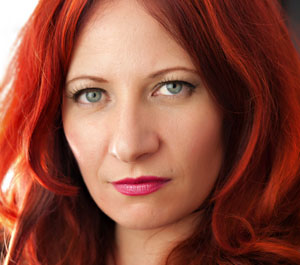
ELIZABETH-BACHINSKY-nov2013-800x450Interview by Nicole Boyce

Elizabeth Bachinsky is the Editor of EVENT Magazine, an award-winning journal published out of Douglas College in its 42nd year of publication. Bachinsky is the author of five collections of poetry. Her work has been nominated for the Bronwen Wallace Memorial Award, the Pat Lowther Memorial Award, and the George Ryga Award for Social Awareness in Literature. Her second collection, Home of Sudden Service, was nominated for the Governor General’s Award for Poetry. She is a graduate of UBC’s MFA Creative Writing program and a creative writing instructor at Douglas College.

I spoke to her on the phone, as she was—in typical multitasking style—en route to a meeting of EVENT’s fiction board. She was delightfully friendly, funny and candid.

How did you become interested in literary magazine editing?

I’ve always been interested in magazine editing. I had a friend not long ago who sent me a copy of a literary magazine that I edited in high school called Free Word. It was just a little photocopied pamphlet that we were publishing at Thomas Haney Secondary in Maple Ridge. I had totally forgotten that I’d ever done that, but I did, and I was also involved in the yearbook, that kind of stuff. I wanted to be a publisher for a long, long time. Even when I was a little kid, I’d rewrite fairytales and draw pictures with them and put them in laminated covers and staple them. But I didn’t start doing it for money, like, as a “job-job,” until I worked at PRISM international. I was the Assistant Editor there, then the Poetry Editor.

[Read more…]

Amber Dawn

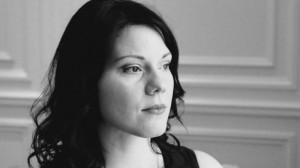
Amber-DawnBy Leah Horlick

Amber Dawn came to my house for an interview one rainy February afternoon during the last term of my MFA in Vancouver. “It’s so weird to be here,” she told me. “I used to have friends who lived in this house. It was a bit more punk rock then. I even broke in through that back window one time.”

As if she wasn’t badass enough already, Amber Dawn is a writer, filmmaker, activist, and performance artist whose first novel, Sub Rosa, won a Lambda Literary Award in 2011. Her poetry chapbook How I Got My Tattoo won the Eli Coppola Chapbook Prize from RADAR Productions in 2012, when she also won the Writers’ Trust of Canada Dayne Ogilvie Prize for LGBT Writers. In her forthcoming book How Poetry Saved My Life, Amber Dawn tells her story of working in the sex trade in Vancouver through nonfiction and poetry. I spent an afternoon with Amber Dawn where she talked about her star-crossed relationship with memoir and poetry, and her commitment to community activism.

I was wondering if you could tell me a bit about writing and publishing a mixed-genre book like How Poetry Saved My Life.

Well, I first of all did not say to myself, “I want to write a mixed genre prose and poetry book” and set out to do that. If someone asked me to write out my life story, or a chunk of time where I worked in the sex trade, there’s no way I could stomach it. I also just don’t feel like my story is best told through a chronological view of time. I don’t think that most people’s lives are that tidy, and mine certainly isn’t. So I just started writing bits and pieces, mostly therapeutic to begin. Then, when I got to grad school I tried nonfiction with Andreas Schroeder for the first time. That’s when I really started to write my story, in that class. But where I did most of my writing was to submit to sex worker festivals in the United States that were. I would often write just to be able to be in those shows, I was so desperate for community. It was great to leave the city and be more anonymous. And eventually realized I had a book’s worth of writing. And even then I sat on it for a long time because I wasn’t sure if I wanted to put it out in the world. So I didn’t set out to do it. If I had set out to do it I’m sure I would have failed. [laughs] [Read more…]

Fiona Lam

fiona-lamBy Tara Armstrong

Fiona Tinwei Lam is the author of two books of poetry, Intimate Distances and Enter the Chrysanthemum. Her poetry, fiction and non-fiction have been included in over twenty anthologies. She is a co-editor of and contributor to the literary non-fiction anthology, Double Lives: Writing and Motherhood published by McGill-Queens University Press in 2008.  She edited The Bright Well, a collection of contemporary Canadian poetry about facing cancer, published by Leaf Press in 2011. Oolichan Books will be publishing The Rainbow Rocket, her first book for children in 2013.

Stepping into Higher Grounds Coffee on a drizzly Thursday morning, Fiona Tinwei Lam scans the room. I wave. She approaches. We shake hands. Then, we argue over who will pay for the tea. “I’ll pay. You’re a student,” insists Fiona. “It’s your time. Please,” I say. I win and we settle into the interview over two cups of herbal tea.

Did you always write, even as a child?

I started writing poetry regularly in grade seven. I was encouraged by my teacher to keep going, so I continued writing poetry through high school. But then when I reached university I thought it was time to be practical. So I did a degree in political science. Then I did two law degrees. And it wasn’t until after all of that, that I came back to writing, and completed an MFA in Creative Writing at UBC. [Read more…]

Tanya Davis

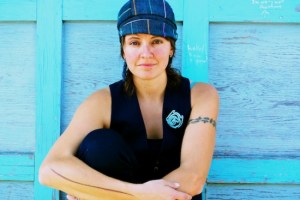
TanyaDavisBy Alexis Pooley

Tanya Davis was the 2011/12 Poet Laureate of Halifax, Nova Scotia. Her creative collaboration with Andrea Dorfman, the videopoem How to be Alone, has had more than 5 million views on YouTube, garnering Tanya new fans and supporters from the world over. She regularly receives commissions to pen poems and speeches and has worked in this regard for such bodies as the Canada Winter Games, the PEI Advisory Council on the Status of Women, CBC Radio, and the National Film Board of Canada. She also works and performs as a songwriter and musician and has released 3 full length albums, picking up awards and nominations for each one. Her first book of poetry, At first, lonely, was published in 2011 by Acorn Press.

Your work has often sidestepped traditional, singular genres in order to merge and embrace multiple genres and has attracted a widespread audience. When you first began your career did you ever have concerns, not in your work or in your creative vision, but in your work finding an audience?

I had a few concerns, sure, but they didn’t overwhelm me. At the end of the day, I’m not that strategic, in the business-savvy sort of way. I make art for joy and fulfillment and because it’s the kind of work I’ve come to realize I do best; that is, in all its facets. I just want to create things and so it’s less of a priority to cultivate one specific audience. I like to do lots of different things. It makes life (and creativity) more interesting. [Read more…]